
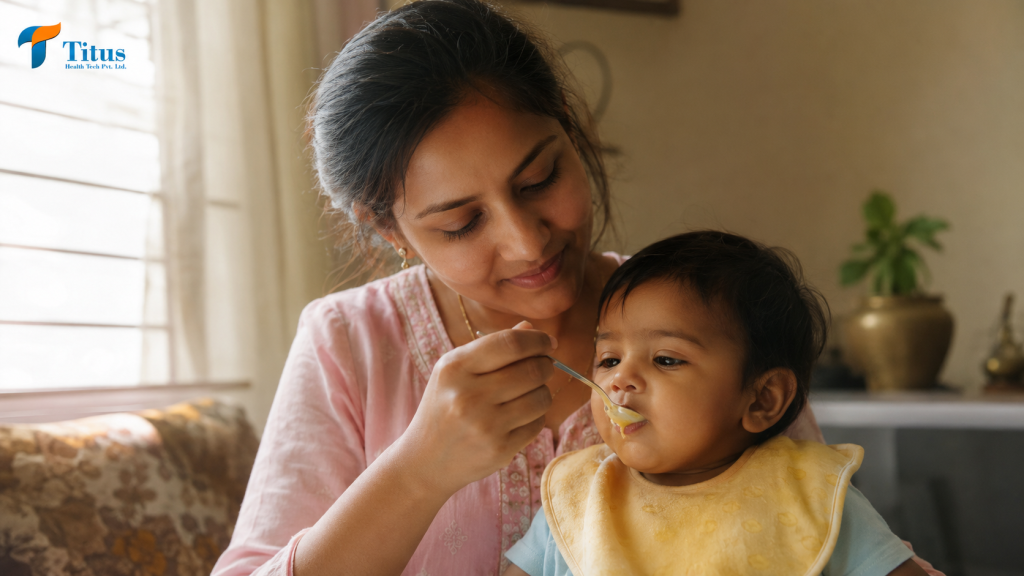
When it comes to a baby’s first solid foods, parents read every word on the box. That is exactly why the maker behind the product matters so much. Professional Satvik Cereal makers bring clean ingredients, careful cooking, and real testing to the table. So what ends up in the bowl is gentle, safe, and good for a baby.
But what does “satvik” really mean here, how is this cereal actually made, and which rules keep it safe? This guide answers all of that in plain language. By the end, you will know what separates a serious maker from a basic one, and why that gap is worth caring about.
| Quick answer Satvik Cereal is baby cereal made with pure, simple, plant-friendly ingredients and no harsh additives, following the “satvik” idea of clean and wholesome food. Professional makers ensure quality through tested grains, gentle cooking, fortification with key nutrients, strict hygiene, and FSSAI and BIS compliance. |
The word “satvik” comes from the idea of food that is pure, light, and easy on the body. Applied to baby food, Satvik Cereal means a cereal built from clean, simple ingredients, like grains, pulses, and gentle natural flavours, without artificial colours, harsh preservatives, or heavy processing.
For a tiny digestive system, that purity is not a marketing nicety. It is the point. Simple, well-cooked grains are easier to digest and less likely to upset a baby. A good Satvik Cereal keeps the ingredient list short and honest, and lets the nutrition do the talking.
Anyone can grind grain and call it cereal. Making it safe, consistent, and nutritionally right is a different skill entirely. That is where professional makers earn their place.
A home kitchen cannot promise all five at once. A professional Satvik Cereal plant can, and it documents the proof.
The process looks simple from outside and is surprisingly precise inside. Here is the usual path from grain to box.
Each stage protects the next. Skip the screening and you risk a bad batch. Rush the cooking and the cereal is harder to digest. The Titus manufacturing infrastructure page shows the kind of setup this careful work needs.
Baby food is one of the most tightly regulated product categories, and rightly so. An infant cereal manufacturer in India works under FSSAI rules and the relevant BIS standards, which cover ingredients, nutrition, hygiene, and labelling.
| Standard | What it covers |
| FSSAI licence | Legal permission to make and sell infant food in India. |
| BIS standards | Composition and quality limits for cereal-based baby food. |
| ISO 22000 | A whole-plant food-safety management system. |
| HACCP | Hazard control at every critical step of production. |
| Label rules | Honest nutrition claims and clear feeding guidance for parents. |
A responsible infant cereal manufacturer in India treats these as the floor, not the ceiling. Many go further with their own internal limits. You can see how one producer frames its standards on the Titus quality policy page. If a supplier cannot show current certificates, that is a clear signal to look elsewhere.
Behind every box sits a list of tests that most parents never see. These checks are the real guardrails.
When all of these pass, batch after batch, you have a product a parent can trust. A professional maker runs these as routine, not as a one-off.
So why partner with a specialist instead of a generalist? A natural satvik cereal manufacturer in India brings focus, clean sourcing, and deep know-how to a product where small details matter a lot.
For a deeper look at how certification ties into this, this piece on ISO-certified satvik cereal quality is worth a read.
| Building a baby cereal brand? Talk to the Titus team about clean, certified, custom-made Satvik Cereal for your label. Reach out here. |
Most new baby brands do not build a plant. They work with a maker on private label terms instead. The producer makes the cereal to your recipe and your brand, while you handle marketing and sales. It is faster, cheaper, and far less risky than going it alone.
A strong private label setup covers recipe development, fortification, custom packaging, and small trial batches before a full run. If that is your plan, the Titus private labeling page explains how the model works step by step. The better partners also help with export paperwork and small recipe tweaks for different regions, so you can grow beyond your home market when you are ready.
A few simple checks separate the serious makers from the rest. Use them before you commit.
A genuine partner welcomes every one of these questions. Hesitation on any of them is a quiet red flag.
Ingredients tell you a lot at a glance. A clean baby cereal keeps the list short and recognisable. You should be able to read it and know what each thing is.
If the label reads like a chemistry set, be cautious. The cleaner products keep things simple on purpose, because simple is easier for a baby to digest and easier for a parent to trust.
Not every box on the shelf is made with the same care. A few warning signs are easy to spot once you know them.
A quality product avoids all of these. When a maker cuts corners on ingredients, it usually cuts them on testing too. The two tend to travel together.
A small brand once launched a cereal that tasted great but used grain that was never properly screened. A few months in, a batch tested high for a contaminant picked up from poor storage. The brand had to pull stock and rebuild trust from scratch.
A competitor took the slower route. They screened every batch of grain, ran lab checks, and kept clean records. Their launch was quieter, but it held. Same shelf, very different story, and the difference came down to the care behind the powder.
Quality does not end at the factory. How a cereal is stored and served matters too. Even a perfectly made product can spoil with careless handling at home or on the shelf.
Good makers help here by using moisture-barrier packaging and clear instructions. The pack is part of the product, not an afterthought, and a thoughtful maker treats it that way.
A baby’s first cereal deserves real care, not shortcuts. Professional makers deliver that through clean sourcing, gentle processing, honest fortification, and constant testing. A trustworthy Satvik Cereal maker can prove all of it on demand, and that proof is exactly what protects both babies and brands. In a market where parents compare labels closely, that kind of transparency is also what wins repeat buyers and steady growth.
If you are choosing a partner, look past the label and check the process. Confirm the certificates, request a sample, and ask how the cereal is cooked and tested. Ready to compare options or start a custom batch? The Titus team can help. They can walk you through the baby cereal range and show what a tailored Satvik Cereal would look like for your brand.
It refers to food that is pure, light, and wholesome. In baby cereal, it means clean, simple ingredients without artificial colours or harsh additives.
Yes, when made by a professional maker. Careful cooking, fortification, hygiene, and lab testing make it gentle and safe for a baby’s digestion.
Look for FSSAI, the relevant BIS standards, ISO 22000, and HACCP. Together they cover legal, safety, and hygiene requirements.
A natural satvik cereal manufacturer in India focuses on clean ingredients, gentle processing, and reliable nutrition, which builds trust with parents and protects your brand.
Yes. Private label makers develop the recipe, fortify it, package it under your brand, and handle compliance, so you can launch without building a factory.
Gentle cooking and sometimes enzyme treatment break down the starch, so a baby’s system can handle it more easily than raw grain.
Most babies begin single-grain cereals around six months, once they can sit with support and show interest in food. Always check with your paediatrician first, since every child is different.
WhatsApp us