
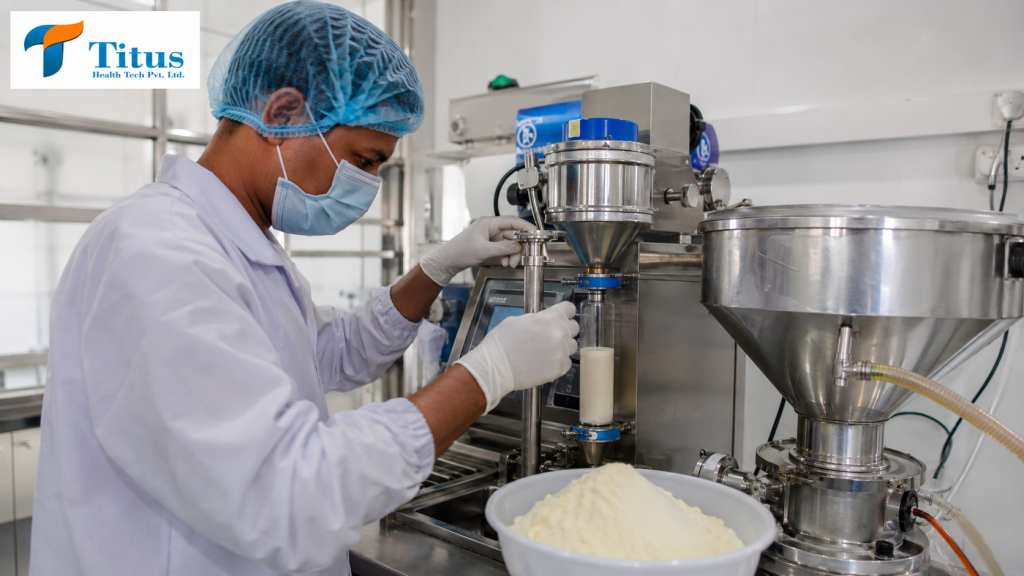
Good baby nutrition starts long before a tin reaches a store shelf. It starts inside the plant. The most trusted Infant Milk Food Manufacturers in India build quality into every single step. They watch it from milk sourcing all the way to the final seal. So the powder a parent scoops out stays safe, consistent, and full of the right nutrients.
That is the short version. The longer story is more interesting, because “advanced processing” is not one clever machine or one secret step. It is a chain of tightly controlled stages, and each one is checked, then checked again. Below, we walk through how serious producers actually do this, what really matters when you pick a partner, and the questions worth asking before you commit.
| Quick answer Premium infant milk food comes from four things working together: clean and traceable raw milk, gentle low-temperature spray drying, sealed clean-room blending, and lab testing at every stage. Strong Infant Milk Food Manufacturers also hold FSSAI, BIS, ISO 22000, and HACCP certificates. They keep full batch records too. So any tin can be traced right back to its source. |
Parents do not read process charts. They just want a tin that mixes smoothly, smells fresh, and is safe. So “premium” has to be defined in plain terms. For infant milk food, it comes down to a few things you can measure and prove.
When all five hold true, every time, you are looking at a quality-led plant. When even one slips, trust breaks fast. That is the bar real Infant Milk Food Manufacturers set for themselves.
Here is the part most buyers never see. Advanced processing is really a sequence, and the order matters as much as the equipment. These are the core stages that careful producers follow.
Notice how testing sits at both ends and in the middle. That is the difference between a plant that hopes the product is good and one that knows it is. For an inside look at how a modern facility is laid out, the Titus manufacturing infrastructure page shows the kind of setup this kind of control needs.
A newborn’s gut is delicate. It cannot handle rough ingredients, odd bacteria, or wild swings in nutrition. So the care taken inside the plant shows up directly in how a baby feeds, sleeps, and grows.
Take spray drying as one example. If the heat runs too hot to save time, sensitive vitamins break down and protein quality drops. The powder might still look fine, yet it quietly delivers less than the label promises. Gentle, well-managed drying avoids that. The same logic applies to moisture control. Even a little extra humidity in the packing room shortens shelf life and invites clumping. Tiny details, big outcomes.
This is also why consistency is such a big deal. A parent who buys the same tin twice expects the same product twice. Behind that simple expectation sits a lot of disciplined work, from fixed nutrient targets to repeatable drying settings. Producers who treat each batch as unique cannot deliver that. The careful ones can, and they build their whole process around it.
Processing gets the attention. Packaging keeps the result safe. Infant milk powder is sensitive to air, light, and moisture, so the final pack does real work. A weak seal or a cheap laminate can undo weeks of careful production.
When you tour a plant, look at the filling room as closely as the dryer. The way a producer treats packaging tells you how seriously it treats the whole job.
Anyone can claim quality. Certificates are how you check the claim. In India, a few of them carry real weight for baby nutrition. The best infant food manufacturer in India will hold most or all of them.
| Certification | What it proves |
| FSSAI | Legal licence to make and sell food in India, with basic safety compliance. |
| BIS (IS 14433) | Indian standard specifically for infant milk substitutes and food. |
| ISO 22000:2018 | A full food-safety management system across the whole operation. |
| HACCP | Hazard control at every critical point in the process. |
| GMP | Good Manufacturing Practice for hygiene, equipment, and documentation. |
A quick tip from experience: ask to see the certificates with current dates, not screenshots from three years ago. A genuine partner shares them without fuss. You can see how one producer frames this on the Titus quality policy page. Certificates alone do not make the best infant food manufacturer in India, but a plant missing the basics should make you pause.
This is where brands win or lose. Picking the right partner is not about the lowest price per kilo. It is about who can keep you safe, compliant, and consistent for years. When you compare Infant Milk Food Manufacturers, weigh these points.
If you want a deeper, step-by-step framework, this complete buyer’s guide to selecting infant milk food manufacturers breaks the whole vetting process down further.
Most new baby brands do not build their own factory. They work with private label infant milk food manufacturers in India instead. It is faster, cheaper, and far less risky. The partner makes the product to your formula and your brand, while you focus on selling.
A good private label setup usually covers recipe support, legal paperwork, custom packaging, and small trial batches before a full run. The stronger private label infant milk food manufacturers in India will also help you register products for export and adapt recipes for different markets. If that is your plan, the Titus private labeling page explains how the model works in practice.
One honest caveat. Private label only works when both sides are clear from day one. Agree on specs, testing limits, lead times, and minimum order quantities in writing. The best private label infant milk food manufacturers in India welcome that clarity, because it protects everyone.
| Planning your own baby nutrition line? Talk to the Titus team about formulation, certification, and private label production built around your brand. |
After watching this market for years, the same avoidable errors show up again and again. Knowing them upfront saves real money.
None of these are dramatic. They are quiet mistakes. But each one can sink a launch, so slow down and verify before you scale.
Plenty of plants can make powder. Far fewer can make it safe, consistent, and provable, year after year. The leading Infant Milk Food Manufacturers stand out because they treat quality as a system, not a slogan.
In practice, the best Infant Milk Food Manufacturers run their own labs, keep food technologists on staff, and document every batch. They also invest in their people, because skilled hands and trained eyes catch problems that machines miss. When you visit a plant, watch how the team works under pressure. Calm, careful Infant Milk Food Manufacturers rarely cut corners, even on a deadline.
A small brand once came to market with a lovely tin and a weak supplier. The recipe looked right on paper. But the first export shipment failed an overseas heavy-metal test, because the raw milk had never been screened properly at intake. The brand lost the order, the customer, and months of work.
Compare that with a brand that started slow, ran a sample batch, checked every certificate, and insisted on intake testing. Their first shipment cleared customs without a hitch. Same market, very different outcome. The only real difference was the partner behind the powder.
Premium baby nutrition is not luck. It is the result of disciplined sourcing, gentle processing, real testing, and honest paperwork. The Infant Milk Food Manufacturers worth your trust treat every batch as if their own child will drink it, and they can prove it on demand. That mindset is what separates dependable Infant Milk Food Manufacturers from the rest of the pack.
If you are choosing a partner, look past the sales pitch. Check the certificates, ask for a trial batch, and confirm they can grow with you. Reliable Infant Milk Food Manufacturers will pass all three without hesitation. Ready to compare options or start a sample run? The Titus team is happy to help. They can walk you through the full infant formula range and show what custom production would look like for your brand.
They test for microbial safety, nutrient levels, moisture, heavy metals, and adulterants. A batch is held until results clear, then released.
Look for FSSAI, BIS (IS 14433), ISO 22000, HACCP, and GMP. Together they cover legal, safety, and hygiene standards.
Almost always, yes. Private label infant milk food manufacturers in India let you launch without huge capital, and they handle production, testing, and compliance.
Check their track record, in-house R&D, lab testing, current certificates, and references. A real partner shares all of it openly.
Gentle drying protects delicate vitamins and proteins. High heat can damage them, so careful temperature control keeps the nutrition intact.
Strong partners can. They provide batch records, documents, and recipe tweaks needed to meet the rules of other countries.
It varies, but a typical timeline runs eight to sixteen weeks. That covers formulation, sample trials, packaging, testing, and the first production run. Export registration can add more time depending on the destination country.
WhatsApp us