
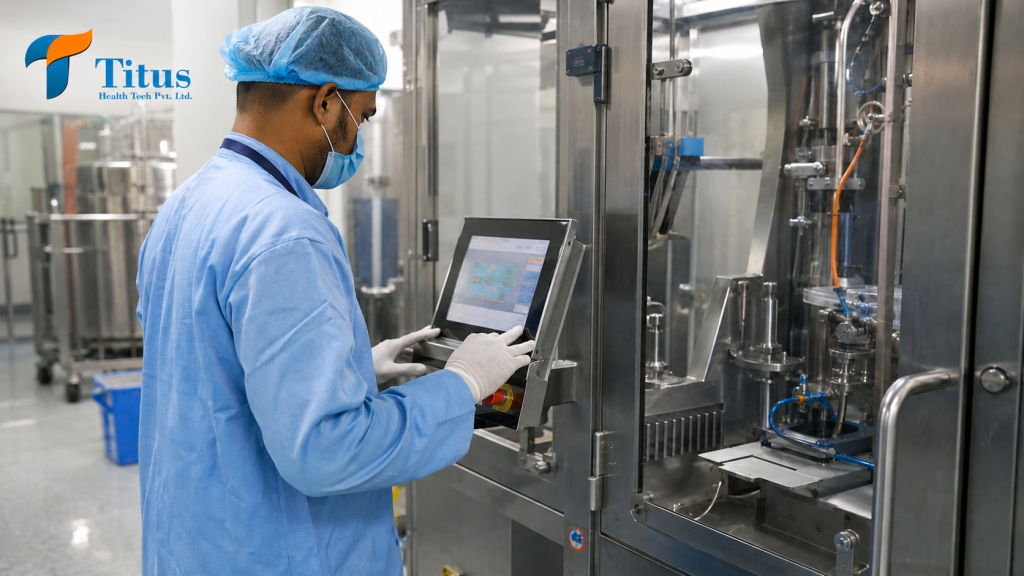
Safety in baby nutrition is not a slogan. It is a daily habit, repeated thousands of times. A careful Infant Formula Manufacturer in India runs on routine checks, clear records, and a refuse-to-cut-corners mindset. The reason is simple. A single weak batch can put a child at risk and end a brand overnight.
So how does that discipline actually work inside a plant? This guide pulls back the curtain on the systems, the rules, and the day-to-day controls that keep infant formula safe. Whether you are sourcing for your own brand or just curious about what good looks like, you will leave knowing what to ask and what to expect.
| Quick answer An Infant Formula Manufacturer in India keeps quality strict through layered controls: tested raw materials, clean-room production, HACCP hazard checks, batch-by-batch lab testing, full traceability, and BIS compliance under IS 14433. Every batch is held until lab results clear it, and records let any tin be traced back to its source. |
On the floor, safety is mostly invisible and very boring, in the best way. It is people following the same checklist, every shift, without skipping steps. That repetition is the point.
When these habits hold under pressure, even on a busy day with a big order due, you are looking at a real safety culture. That is the heart of how a trusted Infant Formula Manufacturer in India earns its reputation.
Good intentions do not keep babies safe. Systems do. A few frameworks do the heavy lifting, and they work together rather than alone.
HACCP maps out where things could go wrong and sets a control at each risky point. Heat treatment, drying temperature, and packing moisture are common control points. If a reading drifts out of range, the line stops and the batch is held. No exceptions.
Heat-sensitive nutrients are added after drying, in low-moisture clean rooms with filtered air. This is where contamination risk is highest, so access is tight and hygiene is strict. The Titus manufacturing infrastructure page shows how a plant is laid out to make this control possible.
Full traceability means any finished tin can be traced back to its milk source, ingredients, and test results within minutes. It sounds dull until something goes wrong, and then it is the difference between a tiny, targeted recall and a brand-ending mess.
Here is how one batch moves through a careful plant, step by step.
Seven steps, dozens of checks. Skip any one and safety slips. Hold them all and you get a tin a parent can trust.
Not every plant is built the same. A science-led Infant Formula Manufacturer in India invests in research, skilled people, and its own lab. Formula is a technical product, not a simple commodity. Recipes drift. Ingredients vary by season. Stability problems appear. Solving these needs real expertise on staff, not guesswork.
Think about a recipe that suddenly starts clumping after a supplier change. A science-led Infant Formula Manufacturer in India can find the cause, adjust the formula, and re-test it quickly. A weaker plant just ships the problem to you. That gap in capability shows up later as returns, complaints, and lost trust.
So when you vet a partner, ask who actually develops the formula. The best answer is a team of food technologists inside the company. An experienced Infant Formula Manufacturer in India treats R&D as core, not an afterthought.
People often use these terms as if they mean the same thing. They do not, and the difference matters for safety.
A reliable Infant Formula Manufacturer in India runs both at once. Control catches the rare problem that slips through. Assurance reduces how often problems happen at all. Together they form a safety net with very few holes.
Safety you cannot prove is just a claim. That is why records matter so much. A serious Infant Formula Manufacturer in India keeps complete batch records, certificates of analysis, and process logs for every run, and stores them for years.
These documents do real work. They support exports, satisfy audits, and make recalls fast and precise. If a buyer in another country asks for proof, a well-run Infant Formula Manufacturer in India can produce it the same day. Ask any partner how their record-keeping works. The answer tells you a lot.
India does not leave baby food to chance. Infant formula falls under FSSAI rules and the BIS standard IS 14433, which sets out exactly what the product must contain and how it must be made. A BIS certified infant formula manufacturer in India has proven, through audits and testing, that it meets that standard.
| Requirement | Why it matters |
| FSSAI licence | Legal permission to make and sell infant food in India. |
| BIS IS 14433 | The specific Indian standard for infant milk substitutes. |
| ISO 22000 | A whole-plant food-safety management system. |
| HACCP | Hazard control at every critical point in the process. |
| Label compliance | Honest nutrition claims and clear feeding guidance. |
Working with a BIS certified infant formula manufacturer in India protects you in two ways. It keeps your product legal at home, and it makes export registration far smoother abroad. You can see how one producer frames its standards on the Titus quality policy page. A plant that cannot show current BIS compliance is a plant to walk away from.
Most growing brands do not build factories. They partner with a producer for private label and contract manufacturing. The largest private label infant formula manufacturer in India can do this at real volume, with the systems to keep quality steady as orders climb.
Scale is where weak partners crack. A small run can look perfect, then a ten-times-bigger order brings clumping, label errors, or missed dates. The largest private label infant formula manufacturer in India avoids that by building capacity, documentation, and quality control to match the volume, not just the sample. For a closer look at how this works in practice, this piece on how a manufacturer supports private label growth at scale is a useful read.
If you plan to grow fast or export, ask hard questions about capacity early. The Titus private labeling page outlines how the model covers formulation, packaging, and compliance support.
| Need a production partner who treats safety as non-negotiable? Talk to the Titus team about certified, scalable infant formula production for your brand. Start the conversation. |
Certificates and capacity matter, but so does culture. Here is what to weigh before you commit.
A few warning signs tend to show up early. Take them seriously.
None of these guarantees trouble on their own. But two or three together? That is your cue to keep looking.
A mid-size brand once switched suppliers to save a little money. The new plant looked fine on a tour. But it had no on-site lab and thin records. Three months in, a routine export check flagged a contaminant, and the brand could not trace which batches were affected. They had to pull everything, not just the bad lot. The savings vanished, and then some.
The fix was simple in hindsight. Pick a partner with real testing and tight traceability, even if it costs a bit more. Safety systems feel like overhead right up until the day they save your business. That day comes for almost everyone eventually.
Strict quality is not one big action. It is a thousand small, repeated ones, backed by systems that catch mistakes before they reach a baby. A dependable Infant Formula Manufacturer in India proves its safety through audits, testing, traceability, and BIS compliance, and it does so without being asked twice.
If you are choosing a partner, look for that quiet discipline. Check the certificates, watch a batch get traced, and confirm the plant can scale with you. Ready to compare options or run a sample batch? The Titus team can help. They can walk you through the infant formula range and show what certified production would look like for your brand.
Layered controls: tested raw materials, clean-room production, HACCP, batch testing, full traceability, and BIS compliance. Each batch is held until the lab clears it.
It is the Indian standard for infant milk substitutes and food. A BIS certified infant formula manufacturer in India has proven it meets this standard through audits and testing.
It lets a producer trace any tin back to its source within minutes. That makes recalls small and targeted instead of brand-ending.
The largest private label infant formula manufacturer in India can, because it builds capacity and quality systems to match big orders, not just samples.
Delicate nutrients are added after drying, in low-moisture clean rooms, so they are not damaged by high heat during production.
Yes, always. A sample batch lets you confirm taste, mixability, and lab results before committing to a large, expensive run.
Contract manufacturing makes a product to your spec. Private label goes further, adding your brand, packaging, and often formulation and regulatory support, so you can sell it as your own.
WhatsApp us