
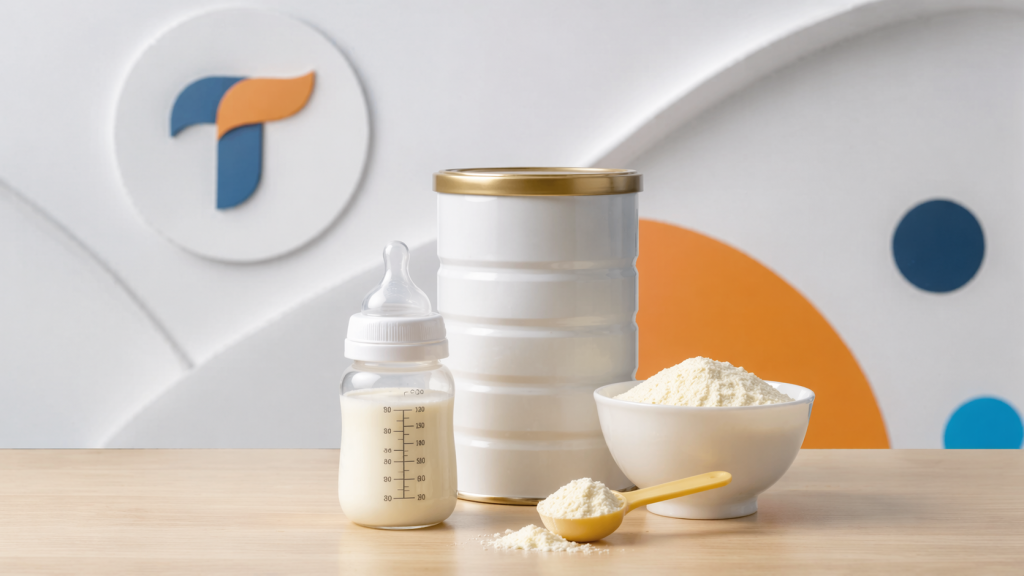
The private label nutrition market has changed quickly, and brands now expect more than basic contract production. They want formulation discipline, dependable supply, clear compliance, and a partner that can grow with demand without weakening quality. That is where an Infant formula manufacturer in India becomes important. The role is not only to make a product, but to support a business model that depends on consistency, trust, and controlled expansion.
For companies entering the baby nutrition space, the pressure is real. Retail buyers want reliability, distributors want stable margins, and parents expect safety without compromise. A strong manufacturing partner helps a private label brand move through those expectations with less friction. In a market where reputation is built slowly and lost quickly, the right Infant formula manufacturer in India can shape the difference between short-term launch success and long-term category leadership.
Private label growth is not just about putting a brand name on a pack. It begins with manufacturing maturity. The manufacturer must understand how to manage recipes, materials, batch records, packaging formats, and production planning in a way that keeps every unit aligned with the same standard. For a category as sensitive as infant nutrition, this discipline is not optional.
A mature partner works like an extension of the brand’s own operations team. It understands how to protect margins while maintaining food safety, how to balance flexibility with control, and how to prepare for scale before scale actually arrives. That preparation matters because private label demand rarely grows in a straight line. One month may bring pilot quantities, and the next may require broader distribution or new pack sizes.
This is also why many companies compare partners against the best-in-class infant food manufacturer rather than focusing only on price. The cheapest production model often becomes expensive later if quality issues, inconsistent fill weights, or packaging delays interrupt the market. A better partner builds a stronger base from the start, making growth more predictable.
Brands that succeed in private label nutrition usually look for a broader capability set. They do not just ask whether a factory can produce volumes. They ask whether the factory can support innovation, documentation, packaging coordination, and repeat orders without losing operational control. That is the real test.
A manufacturer that serves private label growth well usually provides three things: technical stability, commercial flexibility, and regulatory readiness. Technical stability ensures that the product remains consistent across batches. Commercial flexibility allows the brand to adjust order sizes, formats, or packaging layouts as the market changes. Regulatory readiness matters because infant products cannot afford compliance gaps in labeling, nutrient disclosure, or manufacturing hygiene.
The same logic applies to brands that operate across adjacent categories. A business that also sells cereals or weaning foods may need a cereal manufacturing partner that can coordinate development and packaging under one quality system. That kind of integration reduces delays and supports a more coherent product portfolio.
Scaling private label products is easy to describe and difficult to execute. Growth usually brings more complexity, not less. The number of stakeholders increases, expectations rise, and even small disruptions can affect retail confidence. A reliable manufacturing partner helps absorb that complexity so the brand can stay focused on market expansion.
A dependable partner can support growth at scale by reducing uncertainty. When the production system is dependable, the brand can plan promotions, distributor rollouts, and retail expansion with more confidence. That lowers the risk of stock-outs and prevents a lot of reactive decision-making. It also gives the business more room to invest in brand building instead of crisis management.
For enterprise buyers, that control is often more valuable than a low quotation. A factory that can scale once but cannot scale consistently does not support a real private label business. The goal is not just to ship more; the goal is to ship more with the same expectation of safety, freshness, and presentation every time.
This is the kind of operational foundation that separates a basic supplier from a serious growth partner. A brand may begin with a few SKUs, but once distribution expands, the manufacturing model must be able to carry that pace. That is why the strongest partner is usually the one that thinks beyond the first order.
In infant nutrition, quality is not a back-end function. It is part of the product’s value proposition. Retailers, parents, and healthcare-aware buyers all interpret quality as trust, and trust is what keeps private label programs alive. The more serious the category, the more visible the consequences of poor control become.
The best-in-class infant food manufacturer is usually distinguished by the way it treats raw materials, sanitation, documentation, and release procedures. Those elements may not be visible on the shelf, but they shape every customer decision downstream. Brands that choose wisely understand that operational discipline becomes a commercial asset. It reduces rework, supports brand credibility, and makes retail conversations easier.
At this stage, the manufacturer is not just fulfilling an order. It is helping the brand protect its reputation. That is especially important for private label businesses, where the brand owner often carries the customer-facing responsibility even when production is outsourced. Any gap in safety or quality comes back to the brand first.
From a business perspective, this makes quality management one of the most valuable growth levers in the entire model. Strong partners help brands avoid hidden costs such as returns, complaints, relabeling, or distribution pauses. Those risks can be far more damaging than a slightly higher manufacturing rate.
Private label growth does not depend on innovation for its own sake. It depends on useful innovation: better formulation control, better shelf stability, better packaging formats, and better support for market-specific needs. The best manufacturing partners know that innovation should improve reliability, not complicate it.
An Infant formula manufacturer in India that supports scale well usually invests in process improvement rather than flashy positioning. That can mean more efficient blending, better nutrient handling, stronger testing routines, or packaging systems that protect product freshness more effectively. These improvements matter because they influence how confidently a brand can grow.
For categories that sit close to weaning and complementary foods, an Infant cereal manufacturer in India can add value by building development processes that align with infant feeding expectations. In practical terms, this means fewer delays during product launches and a smoother transition between product ranges. For private label businesses, that kind of operational continuity is often more useful than a long list of features.
When innovation is tied to business outcomes, it becomes easier for brands to justify expansion. That is why an Infant formula manufacturer in India with a practical R&D mindset can help private label programs grow faster without becoming unstable.
Many nutrition businesses do not operate in just one category. A brand may begin with formula, then expand into cereals, complementary nutrition, or related infant foods. In that setting, working with one capable partner can simplify the entire commercial model. It creates fewer handoffs, clearer accountability, and a more consistent standard across products.
This is where a broader manufacturing ecosystem becomes useful. A company searching for the Best infant food manufacturer in India is often looking for more than one SKU. It wants a partner that can support a category strategy. That may include formula today, cereals tomorrow, and additional early-life nutrition products later.
A versatile Infant formula manufacturer in India can support this path by offering process familiarity, documentation systems, and packaging coordination that apply across related products. The benefit is not only convenience. It also reduces the learning curve each time the brand launches something new. In a competitive market, that speed can matter as much as formulation quality.
The same thinking applies to an Infant cereal manufacturer in India, especially when a brand wants to build a coherent infant nutrition portfolio. Shared manufacturing logic across products helps the company maintain a stronger identity and a cleaner operating structure.
Private label growth is often discussed in terms of branding, but the commercial structure behind it matters just as much. A strong manufacturer affects working capital, inventory planning, launch timing, and margin consistency. That is why the partnership decision is strategic, not tactical.
An Infant formula manufacturer in India can support growth at scale by reducing uncertainty. When the production system is dependable, the brand can plan promotions, distributor rollouts, and retail expansion with more confidence. That lowers the risk of stock-outs and prevents a lot of reactive decision-making. It also gives the business more room to invest in brand building instead of crisis management.
The best outcomes happen when the manufacturer understands the business logic of the brand. Some brands need small-batch agility at the beginning. Others need steady large-volume supply for multiple channels. A capable partner adapts without sacrificing process control. That adaptability is one reason private label companies continue to rely on experienced producers rather than trying to manage everything in-house.
These advantages do not come from one feature alone. They come from a system that is built for continuity. And continuity is exactly what a serious Infant formula manufacturer in India should be able to provide.
Enterprise-level private label growth needs a manufacturer that can think beyond immediate output. It must be able to handle documentation, volume planning, process consistency, and cross-functional coordination. It must also communicate clearly so that brand teams are never left guessing about progress, timelines, or production constraints.
An enterprise-ready Infant formula manufacturer in India is usually defined by how well it manages small details at scale. That includes procurement discipline, production traceability, packaging verification, and predictable dispatch timelines. When these functions are strong, the brand can build stronger relationships with distributors and retailers because it is not constantly explaining delays or inconsistencies.
A brand evaluating the Best infant food manufacturer in India should look for the same operational discipline, because consistency at the factory level is what keeps the commercial side stable. The same logic applies when selecting an Infant cereal manufacturer in India for a broader infant nutrition range.
This is also where brand reputation becomes closely tied to manufacturing behavior. Private label products depend on trust more than hype. Buyers may notice a campaign once, but they remember a stable product over time. That is why the best-in-class infant food manufacturer is often the one that quietly delivers consistency rather than trying to overpromise.
A strong partner also understands the pace of category growth. It knows that a private label program may begin with a narrow launch but later require broader distribution and more variants. Planning for that reality early saves time later and makes the business look more professional to channel partners.
For brands looking for a partner that understands nutrition manufacturing as a business system, Titus HealthTech presents itself as a serious option. The company’s positioning aligns well with the expectations of private label buyers who want more than a simple production vendor. They want support, consistency, and the confidence that the brand can grow without unnecessary disruption.
Titus HealthTech’s website, TitusHealth Tech, is relevant for businesses that are evaluating how to move from idea to execution with less operational friction. In a category where every detail matters, a partner like this can help the brand maintain product discipline while expanding reach. That is exactly the kind of support a private label strategy requires when it starts moving from pilot stage to broader commercial deployment.
An experienced Infant formula manufacturer in India should ideally help a brand think through the full lifecycle of the product, from first market entry to repeat sales and portfolio expansion. That broader perspective makes the partnership more valuable and more sustainable. For companies that need an Infant formula manufacturer in India with a more structured approach, that difference matters. In the same ecosystem, the Best infant food manufacturer in India and an Infant cereal manufacturer in India should also bring the same discipline across related product lines.
Private label growth in infant nutrition depends on more than the label on the package. It depends on the systems, standards, and execution behind it. A dependable Infant formula manufacturer in India helps brands move with confidence, protect quality, and scale without turning every new order into a new problem. That is the foundation of long-term growth in a category where trust is everything.
For brands comparing partners, the right choice is rarely just about capacity. It is about whether the manufacturer can support the brand’s ambition with consistency, flexibility, and real operational maturity. Titus HealthTech fits into that conversation because it speaks to the needs of businesses that want serious manufacturing support, not surface-level production. For companies building in infant nutrition, that kind of partnership can make the difference between a launch and a durable market position.
Private label growth allows brands to enter the market faster without building their own manufacturing base from scratch. In infant nutrition, this matters because product quality, compliance, and consistency have to be controlled from day one. A capable manufacturer makes that possible.
It supports expansion by managing production, quality systems, packaging coordination, and supply stability. That allows the brand to focus on sales, distribution, and positioning while the manufacturing side remains controlled and predictable. This structure is especially valuable when the brand is scaling into new markets.
Brands should check formulation consistency, compliance readiness, packaging flexibility, and the ability to scale volumes without quality loss. It is also important to understand whether the partner can support long-term growth, not just one launch. That difference often decides whether the relationship is useful for the future.
Experienced manufacturers usually have stronger systems for quality control, documentation, and production discipline. In a sensitive category like infant nutrition, that experience reduces risk and improves trust across the supply chain. It also helps the brand move faster without losing control.
Yes, many brands prefer a partner that can support more than one category. A strong Infant cereal manufacturer in India can help create a more unified product portfolio and reduce complexity across launches, packaging, and planning. That makes expansion more efficient and easier to manage.
Compliance protects the brand, the buyer, and the end consumer. Infant products operate in a highly sensitive category, so labeling, hygiene, traceability, and production controls all need to stay aligned with expected standards. Without that structure, the brand takes on unnecessary risk.
Titus HealthTech supports brands that want a more structured and reliable manufacturing relationship. Its role is relevant for businesses looking to grow with discipline, maintain product integrity, and build a stronger long-term presence in infant nutrition. That makes it a useful option for enterprise-level private label planning.
WhatsApp us