
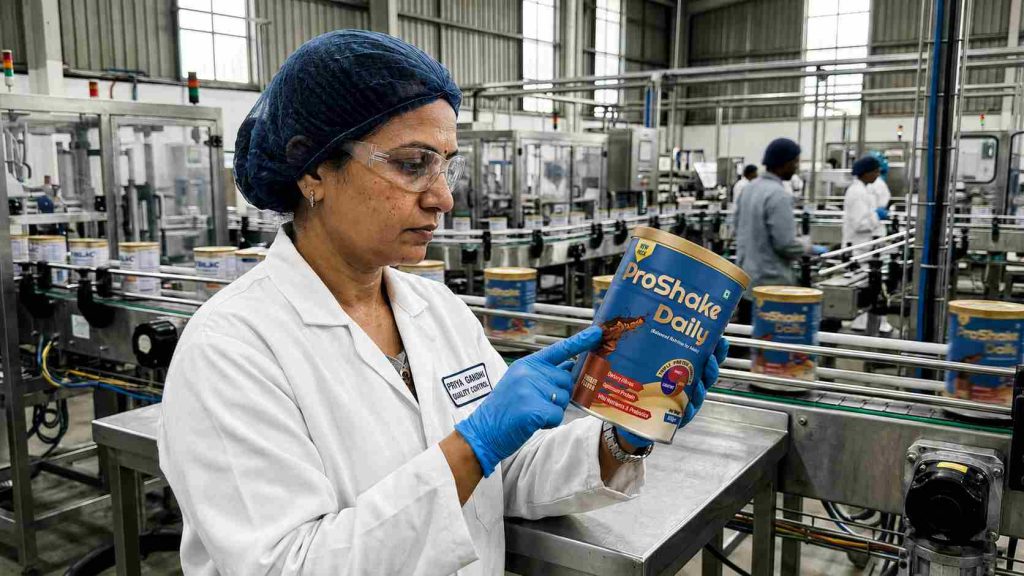
Choosing among infant nutrition products manufacturers is one of the highest-stakes decisions a nutrition brand ever makes. The end user is a baby, so there is no room for cut corners. Yet many buyers still pick a partner on price alone and regret it later. This guide flips that habit. It shows you exactly what quality and compliance should look like, how to spot a serious maker from a shaky one, and which questions separate the two. Read it before you sign anything.
Quick answer
What should you look for in infant nutrition products manufacturers? Prioritise full certifications (FSSAI, ISO 22000, HACCP, GMP, and BIS), in-house or accredited lab testing on every batch, full ingredient traceability, clean-room production, and transparent documentation. Price matters, but safety and consistency matter far more.
It helps to picture the full job before you judge a supplier. Good infant nutrition products manufacturers do far more than mix powder. They source and test raw materials, develop compliant formulations, run controlled production, verify every batch in a lab, and package the product to protect it for its full shelf life. Then they keep the records that prove all of it.
So when you evaluate a partner, you are really evaluating a whole system, not a single machine. That system is what keeps a vulnerable infant safe, batch after batch.
Think of it like a chain. Sourcing feeds formulation, formulation feeds production, production feeds testing, and testing feeds packaging and records. If any link is weak, the whole chain is weak. Strong makers guard every link, because they know a single gap can undo all the rest.
Your name goes on the tin, but the manufacturer controls what is inside it. So their standards become your reputation. One contaminated batch or one failed test can end a young brand overnight. On the other hand, a careful partner quietly protects you every single day.
This is why serious buyers treat the choice of nutritional products manufacturers as a long-term partnership, not a quick purchase. The goal is a maker you can trust when nobody is watching, because in infant nutrition, that is when it matters most.
For a clear look at how these partnerships run day to day, this piece on how private label works with an infant nutrition products manufacturer in India is a useful companion read.
Certifications are your first, fastest filter. They are not just stickers; each one signals a tested system behind it. Insist on these before anything else.
A maker who holds all of these has already passed audits most weak suppliers cannot. You can see how these standards shape production in our own quality policy, which treats certification as a floor, not a ceiling.
Glossy brochures are easy. Real quality lives in the details. So look past the sales deck for these systems.
When a maker can walk you through each of these calmly and clearly, you are usually in safe hands. When they get vague, pay attention.
Certifications are the headline, but the rulebook runs deeper. In India, infant nutrition sits inside a web of regulations, and a strong infant nutrition products supplier knows every strand of it.
The Food Safety and Standards Authority of India (FSSAI) sets the core standards for composition, labelling, and packaging through its Foods for Infant Nutrition rules. Alongside it, the Infant Milk Substitutes, Feeding Bottles and Infant Foods Act, known as the IMS Act, controls how these products can be promoted and protects breastfeeding. Add mandatory BIS requirements, contaminant limits, and strict label rules, and you can see why casual makers struggle here.
So when you assess infant nutrition products manufacturers, check that they treat compliance as routine, not as a scramble at the last minute. That fluency is a quiet mark of experience.
Do not rely on a phone call and a price sheet. Run a proper check instead. This simple sequence surfaces most problems early.
Each step is small. Together, they tell you whether a supplier is built for infant nutrition or just hoping to win an order.
Vetting a manufacturing partner?
Tour our facilities and quality systems, or book a call with our team to see how we meet the standards infant nutrition demands.
Sometimes the fastest decision is a firm no. Treat these signs as deal-breakers.
Consider a common story. A new brand picks the cheapest quote to protect margins. The first few batches look fine. Then a retailer’s random test flags a nutrient that does not match the label. Suddenly stock is pulled, trust drops, and the brand spends far more fixing the mess than it ever saved. This happens because weak makers cut the invisible costs first, testing, sourcing, and controls, and those are exactly the costs that keep infants safe.
The lesson is simple. Careful infant nutrition products manufacturers cost a little more upfront and save you a great deal of pain later.
A short, direct conversation reveals a lot. Bring these questions to your first serious meeting.
How a maker answers matters as much as the answers themselves. Confidence and clarity are good signs. Hesitation and vagueness are not.
Infant nutrition rarely stops at one product. As your brand grows, you may want cereals, follow-on formulas, or speciality options too. So it helps to choose a partner who can support a wider range under one roof.
Full-range nutritional products manufacturers let you expand without restarting your search each time, which keeps quality consistent across your whole line.
The words often blur, but the distinction matters. A pure infant nutrition products supplier may simply resell or distribute what someone else made, while a manufacturer actually produces and controls quality at the source. Both have a place, yet for infant products you usually want as short a chain as possible.
So ask directly: do you make this yourself, or source it? A genuine maker owns the process end to end. When your infant nutrition products supplier is also the manufacturer, you gain tighter control, faster answers, and clearer accountability. The best nutritional products manufacturers happily confirm exactly where and how each product is made.
A great partner is worth keeping. Once you find a maker who clears every check, invest in the relationship. Share your forecasts so they can plan capacity. Agree clear quality benchmarks and review them together. Keep communication open so small issues get fixed before they grow.
Over time, a dependable infant nutrition products supplier becomes an extension of your own team. That stability is priceless in a category where consistency is everything, and it is exactly what reliable nutritional products manufacturers aim to build with every client.
If you remember nothing else, remember this short list. First, demand full certifications and current licences. Second, insist on batch testing and traceability you can verify. Third, favour a maker who produces in-house rather than resells. Fourth, run a pilot batch and test it yourself. Finally, choose a partner who answers hard questions openly. Tick those five boxes, and you have already avoided the mistakes that trip up most new brands.
In infant nutrition, quality and compliance are the whole game. The best infant nutrition products manufacturers earn trust through certifications, testing, traceability, and honest answers, not through the lowest quote. So vet carefully, insist on proof, and choose a partner you would be proud to name on your label. Get that decision right, and everything downstream gets easier.
If you are evaluating partners now, explore our infant formula products and private label programme. Reach out to Titus Health Tech to discuss your quality needs and volumes.
Look for a valid FSSAI licence plus ISO 22000, HACCP, and GMP, with the BIS mark where required. These prove the maker has passed independent food-safety audits.
Verify certifications, tour the facility, request recent test reports, and run an independent test on a pilot batch. Together these steps reveal whether the quality is real or just claimed.
Rarely, for infant products. A price well below the market usually means a compromise on ingredients, testing, or compliance, and that risk is not worth it when a baby is the end user.
A supplier may resell products made elsewhere, while a manufacturer produces and controls quality directly. For infant nutrition, working with the actual maker gives you tighter control and clearer accountability.
Often, yes. Established nutritional products manufacturers produce several stages and formats, so you can grow your range with one trusted partner instead of juggling many.
Experienced makers do. They keep production, labelling, and marketing guidance aligned with FSSAI standards and the IMS Act, which spares brand owners costly mistakes.
It is essential. Full traceability lets a maker track any batch back to its ingredients and act fast if a problem appears, which protects both your customers and your brand.
WhatsApp us