
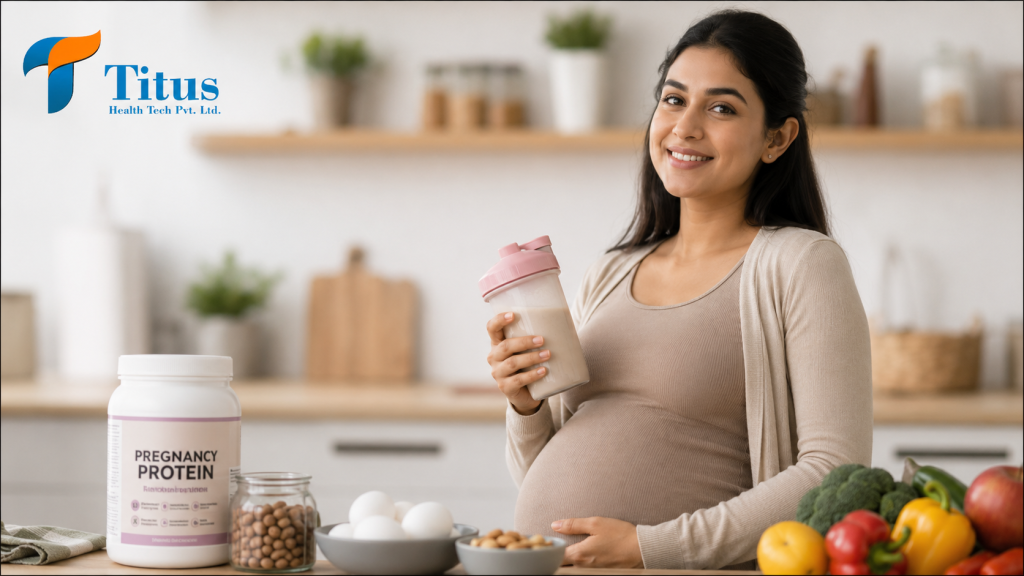
Protein Powder for Pregnant Women is one of the most searched maternal-nutrition topics in India right now, and the questions are always the same. Is it safe? Do I really need it? Which one should I pick? Here is the short version. During pregnancy your body needs more protein to build new tissue, support your growing baby, and keep your own muscles and blood healthy. Food should always come first. Still, when meals fall short during nausea or a packed day, a clean supplement can help fill the gap. The trick is picking the right product and using it with your doctor’s blessing.
| Quick answer Protein powder for pregnant women is generally safe when the product is plain, third-party tested, and low in added sugar, caffeine, or herbal extracts. Use it as a top-up to real food, not as a meal replacement. Always confirm your daily amount with your doctor or dietitian first. |
Your protein needs climb steadily through pregnancy. Because your body is literally building another human, it draws on amino acids to form the placenta, the baby’s organs, and extra maternal blood. In the first trimester, the rise is small. By the second and third trimesters, though, the demand jumps sharply. Protein also helps with a steadier appetite and fewer energy crashes, which most mothers welcome.
When intake is too low, the signs show up quietly. You may feel more tired than usual. Wounds heal slowly. In more serious cases, low protein is linked with poor fetal growth. So meeting the target matters, even when the numbers feel abstract. This is exactly why so many families start looking at protein powder for pregnant women in the first place.
There is no single figure that fits everyone. As a rough guide, many Indian dietitians say protein needs rise by roughly 10 to 23 grams a day above your usual intake as pregnancy moves along, in line with ICMR–NIN advice. Your exact number depends on your weight, your activity, and any medical conditions. Therefore, treat any online figure as a starting point, not a rule.
For most people, that target is reachable through food alone. Here is what a protein-friendly day can look like:
If you hit those marks most days, you may not need a supplement at all. When you cannot, that is where protein powder for pregnant women earns its place.
Think of the powder as a backup, not a foundation. Whole foods bring fibre, vitamins, and minerals that a single scoop simply cannot match. That said, real life gets in the way. Morning sickness can make solid food unbearable. Many mothers are vegetarian and find higher targets hard to reach. Others are carrying twins, which pushes needs even higher. In these cases, a supplement is genuinely practical, because it is quick, gentle on a queasy stomach, and easy to measure.
If you already eat a varied diet with dairy, pulses, eggs, or meat, and your weight gain is on track, you likely meet your needs without help. In that case, save your money. A quick check-up can confirm it. So the honest answer is that protein powder for pregnant women is useful for some, yet optional for many.
Not every powder suits pregnancy. Here are the common options and how they stack up:
In short, the best protein powder for pregnant women is usually the plainest one your body tolerates well.
Used sensibly, a maternal protein supplement does a few quiet, useful things. None of them are dramatic, yet together they add up over nine months:
Still, keep the role honest. Protein powder for pregnant women does not replace a balanced plate. Instead, it simply makes a good diet easier to hit on the days that get away from you.
Choosing the right protein powder for pregnant women comes down to a few clear checks. Follow these steps in order:
| Shopping for a clean maternal protein product, or sourcing one for your brand or clinic? Explore our Speciality Nutrition range or talk to the Titus team , and we will point you to a tested option that fits your needs. |
Some products marketed as protein powder for pregnant women still hide poor ingredients. Before you buy, scan the label for these warning signs:
When a label hides its ingredients, treat that as your cue to walk away.
Research is consistent on the basics. Adequate protein supports healthy fetal growth and maternal tissue, and balanced protein-energy supplements clearly help women who are undernourished. For mothers who already eat well, however, the extra benefit is small. In other words, more is not always better. Very high protein intakes have not shown added gains and may carry risks, so the goal is enough rather than maximum. Most reviews also stress the same point about quality: a clean, simple product beats a heavily fortified one packed with extras you never asked for.
This is why good guidance keeps circling back to one idea. Use protein powder for pregnant women to correct a real shortfall, then stop there. If you want a deeper read on how protein supports the body day to day, see our guide on sports and nutrition, which explains the basics in plain language.
A lot of confusion surrounds this topic, and a few myths keep coming back. Let me clear up the big three.
These myths push many women to either avoid protein powder for pregnant women entirely or overuse it. Both extremes miss the mark, so lean on facts and your doctor instead.
Quality is where many products quietly fail. A trustworthy infant nutrition products manufacturer follows strict hygiene, tests every batch, and meets food-safety standards such as FSSAI, ISO 22000, and HACCP. The same discipline that protects a baby’s formula should protect a mother’s supplement too. You can see how this works in practice on our quality policy page.
If you buy in bulk for a clinic, a hospital, or a brand, your choice of infant nutrition products supplier matters even more. A reliable infant nutrition products supplier shares lab reports, keeps formulations consistent, and ships on time. So ask for documentation before you commit. A serious infant nutrition products manufacturer will hand it over without any fuss.
For families, the lesson is simpler. Buy from brands that name their infant nutrition products manufacturer, show real certifications, and list every ingredient in full.
The takeaway is calm and clear. Protein Powder for Pregnant Women is a helpful tool, not a magic fix. Eat well first, and use a clean, tested supplement only to cover the gaps. Then check with your doctor before you start anything new. Once your baby arrives, your attention shifts to feeding choices like infant formula and first foods, where the same quality rules apply. If you want a maternal protein product made to strict safety standards, the Titus Health Tech team is happy to guide you to the right one.
In most cases, yes. A plain, tested protein powder for pregnant women is considered safe in normal amounts and when cleared by your doctor. Just avoid products with caffeine, herbs, or mega-dose vitamins.
There is no single best brand. Look for a plain whey, soy, or pea protein with third-party testing and a short ingredient list. Your doctor can help you match it to your diet.
Usually one scoop is plenty, but it depends on what you eat. Count food and powder together. Your dietitian can set a safe daily number for you.
Plain whey can be fine. However, skip workout blends with stimulants, creatine, or fat burners. When in doubt, choose a product labelled for general or maternal use.
Neither is automatically better. Whey suits many people, while pea or soy works well if you avoid dairy. Both can meet your needs.
Check the certifications and the maker. A reputable infant nutrition products supplier will share lab reports, list full ingredients, and meet FSSAI and ISO standards. If that information is missing, move on.
Yes. After delivery, the focus shifts to breastfeeding and, when needed, infant formula. The same care you used to pick your protein applies to your baby’s food.
A plain product rarely does. Some women notice mild bloating or gas at first, which usually settles once they lower the dose. If you feel unwell, stop and call your doctor. Watch closely for any dairy reaction if you use a whey or casein product.
WhatsApp us