
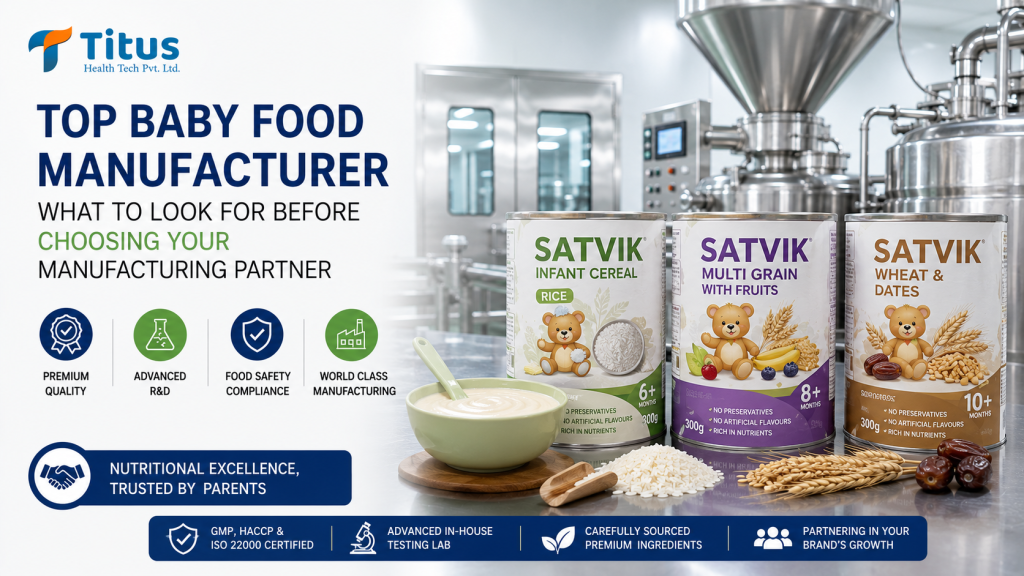
Baby food is one of the least forgiving categories in the food industry. Parents scrutinise labels, regulators scrutinise plants, and a single failed batch can end a young brand early.
So the decision that matters most is not your packaging design or your pricing ladder. It is whether you have found a top baby food manufacturer or merely a willing supplier.
Finding a top baby food manufacturer means looking past the sales presentation at what determines consistency: certification scope, laboratory capability, category experience and documentation discipline.
This guide sets out what experienced buyers check, where new brands go wrong, and how to compare one top baby food manufacturer against another on evidence rather than instinct. For context on a developed product line, this baby cereal product range is a useful reference.
Plenty of food factories can blend powder. Very few qualify as a top baby food manufacturer, because infant nutrition carries a narrow margin for error and a heavy regulatory burden.
A top baby food manufacturer is usually distinguished by four things:
That last point separates a top baby food manufacturer from an ordinary contract packer. Ask for a sample batch record and watch how quickly it arrives.
Infants have immature digestive and immune systems and take one product as a large share of daily intake. Ordinary food tolerances do not apply, which is why a top baby food manufacturer builds its whole plant around that reality.
Powdered products carry specific hazards, particularly Cronobacter and Salmonella, so hygienic zoning, environmental monitoring and validated cleaning matter more here than in most food plants.
A top baby food manufacturer will describe its environmental monitoring programme without being prompted, because it is central to how the site is run.
In India, baby foods fall under FSSAI regulation, with BIS specifications covering infant milk substitutes and processed cereal-based complementary foods. Any top baby food manufacturer will hold licences naming these categories.
The Infant Milk Substitutes Act of 1992 also governs how these products may be labelled and promoted. Check that certification scope names your category, and review the published quality policy of any shortlisted partner.
Reformulating is rarely simple. Changing a cereal base alters viscosity, dispersibility and taste at once, so development runs through trial batches and stability studies first.
In-house scientists resolve these problems faster, which is why a top baby food manufacturer moves from brief to launch in fewer cycles.
Equipment determines what is possible. Spray drying, roller drying, dry blending and packing lines each suit different products, and capacity headroom decides whether a partner can grow with you.
Inspect the plant where possible. Walking through manufacturing infrastructure reveals more in an hour than a month of email exchanges.
Take this checklist into every supplier meeting. Applied consistently, it separates a top baby food manufacturer from the rest of a long list quickly.
A top baby food manufacturer will answer all nine directly. Hesitation on any one of them is information in itself.
Complementary feeding usually begins around six months, when milk alone stops meeting an infant’s energy and iron requirements. Cereal from a specialist baby cereal manufacturer is where most babies meet solid food.
That makes the work of a baby cereal manufacturer genuinely consequential, and it is where a top baby food manufacturer shows its formulation skill. The product must deliver energy density without becoming too thick to swallow comfortably.
Good baby cereal manufacturer operations handle this through careful processing:
Experienced producers also keep ingredient lists short, since parents read them line by line. Clean label is now a commercial requirement, not a preference.
Titus Health Tech Pvt. Ltd. manufactures nutrition powders in Gandhinagar, Gujarat, working with brands across India and export markets.
The site is certified under GMP, ISO 22000:2018 and HACCP, alongside FSSAI and BIS requirements. The company reports partnerships with more than 40 private label firms and 10 international partners.
For buyers assessing whether a plant works as a top baby food manufacturer, the portfolio is organised into four divisions:
For brands entering the category, the private label manufacturing service covers formulation, production and packing under your own brand, while the infant formula range allows a second product line from the same supplier.
The business was founded by professionals with research backgrounds, and the leadership team reflects that emphasis. For buyers evaluating whether a partner qualifies as a top baby food manufacturer, that scientific depth is usually the deciding factor.
Buyer expectations are shifting, and the demands placed on a top baby food manufacturer are shifting with them.
Manufacturers investing in laboratories and documentation will meet these requirements comfortably. Those competing only on price will not.
If you are shortlisting a top baby food manufacturer for a new range, or moving away from a supplier that has stopped keeping pace, begin with a technical discussion rather than a price request.
Share your target market, formulation brief and volumes, then ask what documentation the plant can supply. You can contact the Titus Health Tech team to discuss baby food and baby cereal manufacturing, private label or OEM production, and longer-term supply partnerships.
Choosing well here is a matter of verification. Certifications you have checked, laboratories you have seen, references you have called and contracts stating who carries which responsibility.
A top baby food manufacturer welcomes that scrutiny, because the answers are already documented.
Use the checklist above at your next supplier meeting. It will show quickly which partner is a genuine top baby food manufacturer, and which is simply willing to accept the order.
Certified facilities, in-house laboratories, category experience and complete documentation. A top baby food manufacturer proves quality through records rather than marketing claims.
A current FSSAI licence plus GMP, HACCP and ISO 22000. Confirm the scope names baby foods specifically, not general food processing, and check the expiry dates.
Formula replaces or supplements milk feeds. Cereal is a complementary food from around six months, so a baby cereal manufacturer works to a different BIS specification.
Yes. A baby cereal manufacturer typically covers formulation, production, packing and artwork, letting a brand enter the market without owning a plant.
Plan for several months. Trials, stability studies, label review and licensing all take time, and no supplier can shorten the mandatory regulatory steps.
Minimums vary with pack size and product type. Batches must stay large enough for blending, testing and packing to remain consistent and commercially viable.
Within limits. Mandatory nutrient levels still apply, so a top baby food manufacturer balances shorter ingredient lists against the nutrition standards governing the category.
Many prepare export paperwork and registration dossiers. Import approval in the destination country still rests with the brand owner, not the manufacturing partner.
WhatsApp us