
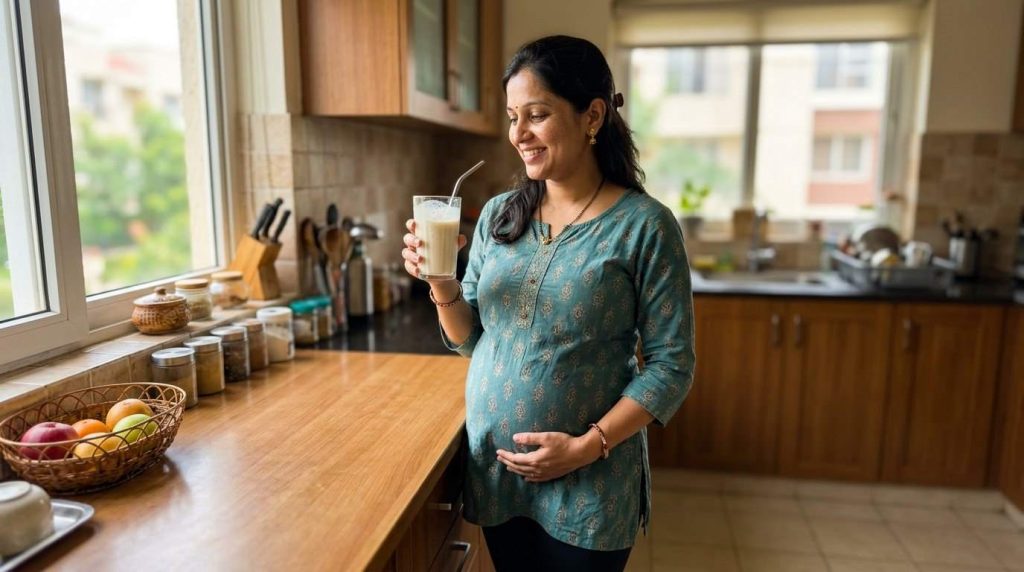
Pregnancy quietly raises how much protein your body needs, and that is exactly why so many expecting mothers in India start reading up on protein powder for pregnant women as an easy way to close the gap. Some powders are a smart, gentle helper. Others hide caffeine, questionable herbs, or fillers that simply do not belong near a growing baby. So this guide sorts the safe from the risky in plain language, so you can decide with your doctor and feel good about it. Whole food always comes first. But the right supplement can quietly handle the rest.
Quick answer
Is protein powder safe during pregnancy? Usually, yes. A clean, third-party-tested protein powder for pregnant women can safely top up your daily protein when meals fall short, as long as your gynaecologist approves it and the product skips high caffeine, unverified herbs, and artificial junk. Think of it as a backup to real meals, not a swap for them.
Before you buy anything, pause. Plenty of mothers meet their target through regular meals and never need a scoop. So run through this short check first, then decide with your doctor.
You may benefit from a protein powder for pregnant women if:
If none of these sound like you, food alone may already be doing the job. But if two or three ring true, a supplement is worth a conversation with your gynaecologist.
Your body builds a lot during these nine months. New tissue, a placenta, extra blood, and a steadily growing baby all run on protein. Because of this, your daily requirement climbs, especially in the second and third trimesters.
The Indian Council of Medical Research (ICMR) recommends extra protein once you are expecting. Older guidance suggested roughly an additional 15 grams a day. Newer trimester-based estimates put the extra need closer to 7 grams in the second trimester and around 22 to 23 grams in the third. In short, the further along you are, the more your plate has to carry. When cooking, appetite, or nausea get in the way, a gap opens up, and that is where a supplement can help.
Numbers help, but they are only a starting point. A dietitian or doctor will tailor the target to your weight, activity, and health. Even so, most Indian women who are eating a balanced, mixed diet can hit a good chunk of the goal through food alone.
Everyday protein sources that do the heavy lifting:
If those foods already fill your day, you may not need a powder at all. But if morning sickness, a busy schedule, or a light appetite keeps your intake low, a clean supplement becomes a practical option worth discussing with your doctor.
Here is a real-world example many mothers recognise. In the first trimester, nausea makes a full thali feel impossible, so protein quietly drops. A small, mild protein drink between meals can bridge that dip far more easily than forcing down a heavy plate. Then, by the third trimester, the baby is growing fast and your appetite may shrink because there is less room in the stomach. Again, a scoop can help where a big meal cannot. That is the honest case for a protein powder for pregnant women: it fits the awkward moments when food is hard.
Here is the part most articles tiptoe around. Protein powder for pregnant women is not automatically safe or unsafe. It depends entirely on what is inside the tub and who made it. A well-formulated, tested powder can be a genuine help. A cheap, unregulated one can quietly do harm.
So the real question is never just “protein powder, yes or no?” It is “which protein powder, made by whom, and cleared by which doctor?” Once you frame it that way, the decision gets much easier.
Not every ingredient deserves suspicion. Several are well studied and support a healthy pregnancy when the overall diet is balanced.
Some additives show up in generic “fitness” powders and have no place in a pregnancy tub. Scan for these and put the product back if you spot them.
A calm, five-minute check saves a lot of worry. Follow this simple order before you buy.
For a wider view of maternal and infant nutrition, this guide on the importance of breastfeeding and mother’s milk pairs nicely with what you have read here, since good nutrition in pregnancy sets up an easier feeding journey later.
Once your doctor clears a product, the routine is easy. Start small and build up only if you need to. Many mothers mix a scoop into milk, water, or a smoothie once a day, usually between meals rather than in place of one.
Also, keep the timing sensible. A morning shake can steady a queasy stomach, while an evening one can help if dinner ran light. Above all, count the powder as part of your total protein, not on top of an already full day. When used this way, a pregnancy protein powder stays a quiet helper instead of an overload.
Two tubs can look identical and still be worlds apart. What separates them is the factory, the testing, and the standards behind the scenes. That is why the choice of private label protein powder manufacturers matters more than the sticker on the front.
A serious nutrition supplement manufacturer runs its plant under proper certifications, controls raw materials, and tests every batch before it ships. Reputable private label protein powder manufacturers also keep clear records, so if a question ever comes up, the answer is traceable. You can see this quality-first approach in our quality policy, which sets the bar for every product we make.
For brands and clinics, the takeaway is simple. If you are building a maternal nutrition line, partner with a nutrition supplement manufacturer that already understands the safety expectations for expecting mothers. The right maker turns a risky category into a trusted one.
Before you trust any maker, confirm these basics:
The best private label protein powder manufacturers treat maternal products with extra caution, because the end user is not one person but two. A dependable nutrition supplement manufacturer will happily walk you through its testing, sourcing, and compliance instead of dodging the questions. That openness is often the clearest sign of quality you will find.
Building a maternal nutrition brand?
Explore our speciality nutrition range or see how our private labeling service helps you launch a safe, compliant protein line without owning a factory.
Protein needs rise in pregnancy, and food should always lead the way. When meals fall short, a clean, tested, doctor-approved protein powder for pregnant women can safely fill the gap without adding risk. The trick is to read the label like a pharmacist, avoid stimulant-heavy “fitness” tubs, and trust products built by a careful maker. Get those three things right, and the decision stops feeling scary.
If you want maternal nutrition products that are formulated and tested to high standards, our team is happy to help. Talk to Titus Health Tech to learn how we build safe, reliable nutrition for every stage of life.
You can, if your doctor approves it, though many women manage on food alone early on when the baby is tiny. Nausea is common in the first trimester, so a gentle, low-flavour powder sometimes sits better than a heavy meal.
For most women who tolerate dairy, plain whey or milk protein is a safe, well-digested choice. Skip flavoured “fitness” versions loaded with stimulants, and always confirm the specific product with your doctor.
No. A powder is a top-up, not a meal. Real food brings fibre, healthy fats, and micronutrients a scoop cannot match, so keep protein powder as a helper alongside balanced meals.
Check for a clear ingredient list, an FSSAI licence, a named manufacturer, and third-party testing for purity. Trusted private label protein powder manufacturers publish this information rather than hiding it.
Both work. Whey suits women who digest dairy well, while pea, soy, or rice blends are great for vegetarians and vegans. What matters more is purity, testing, and your doctor’s sign-off.
More is not better. Overshooting your protein target adds no benefit and can strain digestion, so stick to the amount your doctor sets and count food and powder together, not separately.
Mild flavours are usually fine, but check for excess sugar, artificial sweeteners, or added caffeine. A simple, lightly flavoured or unflavoured option is the safest bet.
Yes. By working with an experienced nutrition supplement manufacturer, brands can develop a compliant maternal protein line under their own label, complete with safe formulations and full batch testing.
WhatsApp us