
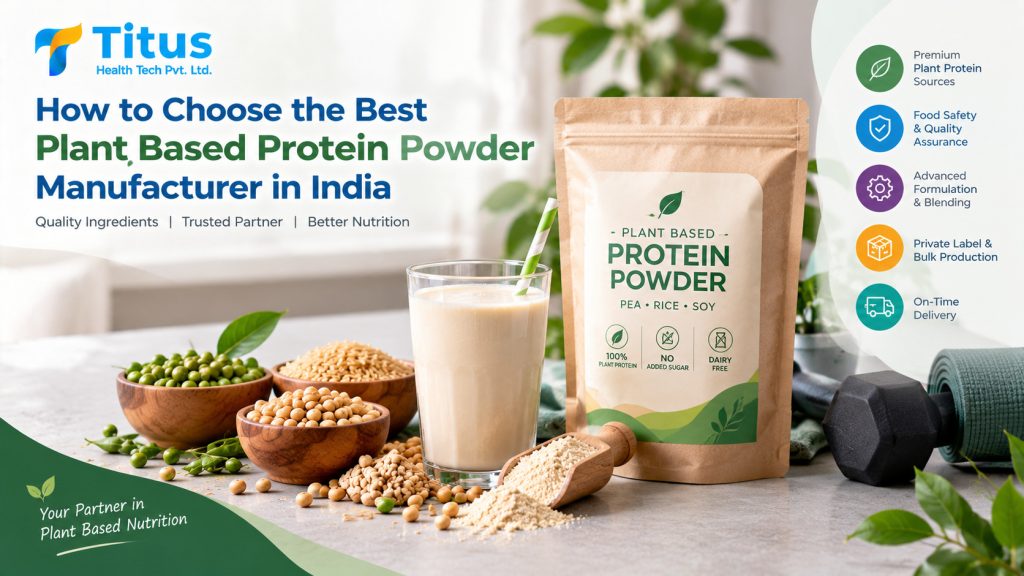
Plant protein has moved from a niche health-store item to a mainstream sports and wellness category. Vegetarian and vegan consumers, lactose-intolerant buyers and people simply looking for dairy-free options now compare products on protein quality, taste and label honesty. For a brand, that makes the choice of a plant based protein powder manufacturer in India a decisive one. If you plan to launch under your own name, private label nutrition manufacturing is the fastest route, provided your partner understands the technical quirks of plant proteins.
This guide explains how plant protein formulation works, which regulations apply in 2026, how to evaluate a partner, and which mistakes to avoid. It is written for founders, fitness brands, distributors and existing supplement companies adding a vegan line.
A plant based protein powder manufacturer in India sources plant protein ingredients such as pea, rice, soy or pumpkin seed protein, blends them with flavours, sweeteners and functional additives, then tests, packs and documents the finished product. The finished powder is usually mixed with water or plant milk as a shake.
The work is technically harder than it looks, which is why the plant based protein powder manufacturer in India you choose matters so much. Plant proteins can taste earthy or bitter, feel gritty, and disperse poorly. A capable plant protein blend manufacturer manages:
The best plant based protein powder manufacturer in India will treat formulation as a science problem, not just a recipe.
Not all proteins are equal. For any plant based protein powder manufacturer in India, protein quality is the first technical conversation. It is usually measured with PDCAAS (Protein Digestibility Corrected Amino Acid Score) or the newer DIAAS (Digestible Indispensable Amino Acid Score), which compare a protein’s essential amino acids and digestibility against human requirements.
In a widely cited 2015 study in The Journal of Nutrition, Rutherfurd and colleagues reported a PDCAAS of 0.89 and a DIAAS of 0.82 for pea protein concentrate, compared with 1.00 and 1.09 for whey protein isolate. Rice protein concentrate scored much lower, at 0.42 and 0.37. A 2025 review of pea protein isolates places pea protein isolate’s PDCAAS in a range of roughly 0.81 to 0.93.
The reason lies in limiting amino acids. Pea protein is relatively low in the sulphur amino acids methionine and cysteine but rich in lysine, while rice protein is limited by lysine. Combining them balances the profile, which is why a skilled plant protein blend manufacturer often recommends pea and rice together rather than a single source. When you brief a plant based protein powder manufacturer in India, ask how they plan to optimise amino acid balance, not just total protein.
Each source brings different strengths and limitations, and an experienced plant protein powder manufacturer will match them to your positioning:
A specialist pea protein powder manufacturer India brands work with should explain the grade of pea protein used, its protein content and how it affects texture. A general plant protein powder manufacturer may offer several sources, but ask which ones they have actually formulated with at commercial scale.
Before you finalise a plant based protein powder manufacturer in India, understand the two main regulatory layers.
Protein powders sold as health supplements fall under the FSS Nutra Regulations, 2022, which cover permitted ingredients, nutrient levels and labelling. Your plant based protein powder manufacturer in India should hold a valid FSSAI licence covering this category.
If you want to call the product vegan, the FSS (Vegan Foods) Regulations, 2022, notified on 10 June 2022, apply. Vegan claims require endorsement from FSSAI, and a vegan protein powder manufacturer India brands work with should guide you through it, and the FSSAI guidelines for vegan logo endorsement set out the application process. FSSAI has also notified an amendment to these regulations that comes into force on 1 July 2027, so check current requirements with your manufacturer before finalising artwork.
A vegan protein powder manufacturer India brands can trust will understand cross-contamination controls, ingredient declarations from suppliers, and the documentation FSSAI expects for endorsement.
Use the following criteria to compare partners side by side. Each is a question you can put directly to a shortlisted plant based protein powder manufacturer in India.
Ask who formulates the products and what plant protein projects they have completed. Request samples of existing formulas in at least two flavours, and ask how a pea protein powder manufacturer India brands already use has improved texture over time. Our article on choosing a custom formulation nutrition powder manufacturer covers formulation questions in more depth.
Plant protein lives or dies on taste, and this is where one plant based protein powder manufacturer in India differs most from another. Test samples in water and plant milk, shaken by hand rather than blended, because that is how most customers will drink it. Grittiness, sediment and aftertaste are the usual problems.
Ask what is tested on every batch: protein content, amino acid profile, microbiology, and contaminants such as heavy metals, which can be a concern with some plant ingredients. A reliable plant based protein powder manufacturer in India will share sample certificates of analysis and name the external laboratories it uses.
If the facility also handles dairy products such as whey, ask how lines are cleaned and verified between runs. This matters both for vegan claims and for customers with milk allergies.
Clarify MOQ per flavour, lead times, formula ownership and capacity for repeat orders with each plant based protein powder manufacturer in India you shortlist. Plant based protein contract manufacturing agreements should also define what happens if a raw material supplier changes, since plant protein grades vary noticeably between suppliers. Ask your plant based protein powder manufacturer in India how it approves alternative suppliers and revalidates formulas.
Most partnerships with a plant based protein powder manufacturer in India follow these steps:
Allow extra time for flavour iterations, and ask your plant based protein powder manufacturer in India for a realistic schedule. Plant proteins often need two or three rounds of samples before taste is right.
With vegan protein private label India projects, you usually choose between two routes. Private label using an existing formula is faster and cheaper to start, which suits brands testing vegan protein private label India opportunities for the first time. Custom formulation gives you a unique blend, your own flavour profile and more control over claims, but needs more development time.
Many brands begin with an existing pea and rice blend from a plant protein powder manufacturer, test the market, and then invest in a custom formula. A flexible plant based protein powder manufacturer in India should support both routes. For a wider view of the sports nutrition category, our guide to choosing a sports nutrition manufacturer in India covers adjacent product types.
A focused conversation quickly shows whether a plant based protein powder manufacturer in India is the right fit. Ask every shortlisted partner:
A capable vegan protein powder manufacturer India brands rely on will answer with documents rather than general assurances. If a plant based protein powder manufacturer in India avoids questions on heavy metals or cross-contact, keep looking.
Plant protein powders are less dense than whey, so the same 30 g serving takes up more space in the scoop and the pack. Ask the plant based protein powder manufacturer in India to confirm scoop size against the declared serving, and to run stability studies in the exact jar or pouch you plan to use. Oxidation of plant fats and moisture pickup can change taste over time, so shelf-life claims should be based on real data rather than assumptions. A pea protein powder manufacturer India buyers trust will also check that the flavour holds up until the end of the declared shelf life, because earthy notes tend to become more noticeable as products age.
New plant protein brands often make the same errors when choosing a plant based protein powder manufacturer in India:
Each of these is easier to avoid when your plant based protein powder manufacturer in India is involved from the briefing stage.
Titus Health Tech is a Gandhinagar, Gujarat based nutrition manufacturer offering private label and contract manufacturing for nutrition powders, including protein supplements and sports nutrition. The company manufactures for more than 40 private label companies in India and 10 international partners, and its facility is certified for GMP, ISO 22000:2018 and HACCP.
Brands planning a vegan protein private label India launch or a broader plant protein range can discuss formulation, sourcing and packaging requirements with the team. If you are evaluating a plant based protein powder manufacturer in India for a new vegan line, contact Titus Health Tech to share your protein targets, preferred sources and volumes.
Plant proteins usually score lower on PDCAAS and DIAAS than whey because of limiting amino acids. Blending sources such as pea and rice improves the profile. A well-formulated blend at an adequate dose can serve most everyday protein needs.
Pea protein is rich in lysine but lower in methionine and cysteine, while rice protein is limited by lysine. Combining them balances the essential amino acid profile, which is why pea and rice blends are common in vegan protein powders.
Yes. Under the FSS (Vegan Foods) Regulations, 2022, vegan claims need endorsement and the vegan logo through FSSAI’s application process. Check the latest requirements, including the amendment due to take effect on 1 July 2027.
MOQ depends on formula, protein sources, flavour count, pack size and printed packaging. Existing formulas usually allow smaller first runs. Share your target volume and pack sizes with the manufacturer to get an accurate quote and MOQ.
Use refined protein grades, blend sources, and invest in flavour masking and sweetener systems. Test samples shaken by hand in water and plant milk. Expect two or three rounds of samples before the taste and texture are ready for launch.
Titus Health Tech offers private label and contract manufacturing for nutrition powders. Brands can share their plant protein brief, including sources, protein target and flavours, and the team can advise on formulation, packaging and documentation.
Every batch should be tested for protein content and microbiology, with amino acid profiling and contaminant screening, including heavy metals, at a defined frequency. Ask for certificates of analysis and the name of the external laboratory used.
WhatsApp us