
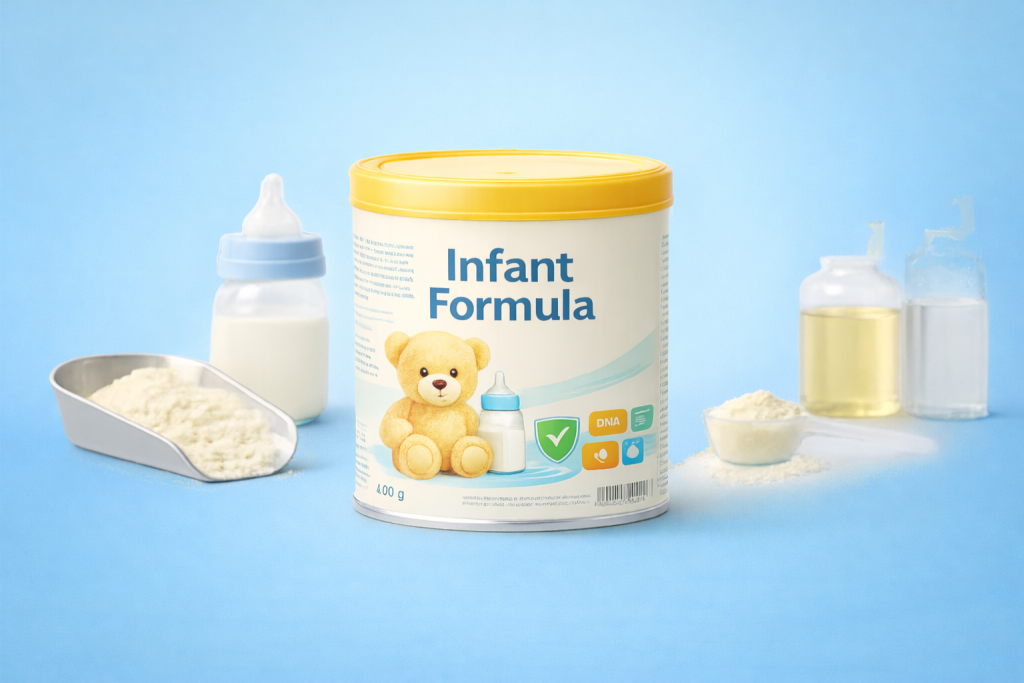
The landscape of pediatric nutrition across India is currently undergoing a massive, fundamental shift. Today, health and safety aren’t just buzzwords; they are absolute non-negotiables for the modern parent. In this high-stakes environment, being a top-tier infant nutrition products manufacturer involves much more than just running a factory. It is about setting new scientific benchmarks and literally securing the biological future of the next generation. Within India’s rapidly maturing industrial sector, enterprise-level units are now ditching old methods for cutting-edge tech and brutal regulatory compliance to ensure every single batch is flawless.
The Evolution of Pediatric Nutrition Standards
If you look back a few decades, pediatric food science was in a different world. Back then, we only worried about basic calories. Today? The conversation has moved into deep-tier science like bio-availability and the intricate development of the gut microbiome. Leading Indian firms are now aligning themselves with global safety heavyweights like Codex Alimentarius, while strictly dancing to the tune of FSSAI mandates.
Any visionary infant nutrition products manufacturer knows that R&D isn’t just a department-it’s the heartbeat of the company. The goal is a moving target: creating formulas that mirror the sheer complexity of breast milk as closely as humanly possible. This isn’t easy. It requires a razor-sharp balance of micro-nutrients, vitamins, and minerals that a neonate needs to actually thrive, not just grow. With awareness exploding across India, parents have stopped looking for the “cheapest” box; they want the safest, most scientifically backed nutrition they can get their hands on.
When you are making food for infants, a “zero error” policy is the only way to survive. Period. At the enterprise level, the very bones of a manufacturing plant must be built to kill the possibility of contamination before it even starts. We are talking Clean Room Technology and high-end automated lines where humans barely touch the product.
A reputable infant nutrition products manufacturer stays awake at night worrying about raw material sourcing. From the purity of the milk base to the chemicals in the packaging plastic, everything gets grilled. Traceability is the anchor here. If a manufacturer can’t tell you exactly which farm an ingredient came from, they shouldn’t be in the game. Indian producers are finally adopting the kind of digital monitoring that gives them 360-degree control over the entire production cycle.
India is a logistical nightmare if you don’t know what you’re doing. It’s vast and diverse. This is why a dependable infant nutrition products supplier is worth their weight in gold. They have to get the product to the shelf on time, every time, in perfect condition. Temperature-controlled logistics are the unsung heroes here. In the enterprise world, the bond between the manufacturer and the supplier is what actually builds a brand’s “trust factor” with the public.
With competition getting tighter, an infant nutrition products supplier has to push harder into emerging markets and rural zones. It’s a dual-win: the business grows, and kids in remote areas finally get the nutrition they deserve. India’s biggest players are now scaring global brands because their manufacturing quality has finally hit international parity.
Science is moving away from just “filling stomachs” and toward functional foods. Modern formulas are now packed with Probiotics, Prebiotics (HMOs), and DHA. These aren’t just fancy acronyms; they are the building blocks for a child’s brain and immune system. A forward-thinking infant nutrition products manufacturer doesn’t work in a vacuum-they partner with pediatricians and nutritionists to see where the market is failing and how to fix it.
Digitalization has flipped the script here too. By using data analytics, manufacturers can see which regions have specific nutritional gaps and then build customized formulas to fill them. This level of precision is exactly what will make India a “Global Nutrition Hub” in the coming years.
After the recent global health scares, winning a parent’s trust is harder than ever. Marketing fluff doesn’t work anymore. Transparency is the only currency that matters. People want to know the “why” and “how” of what’s in the bottle. This is why the best infant food manufacturer in India is always the one with the most honest labeling and the strongest certifications to back it up.
Experts are betting that plant-based and allergy-free formulas are the next big wave. The companies investing in this tech today are the ones who will own the market tomorrow. But to get there, you need constant tech upgrades and a team that actually knows what they’re doing.
The “Make in India” push has really put local guys on the global map. An experienced infant nutrition products manufacturer is now looking past domestic borders toward the Middle East and SE Asia. It’s all about being adaptable and tech-driven.
It’s not just about safety anymore; it’s about the planet. Eco-friendly packaging and slashing carbon footprints are now top-tier priorities for any infant nutrition products manufacturer worth their salt. It makes the brand look modern, ethical, and actually responsible for the future they are feeding.
Let’s be real-this industry is tough. Raw material prices jump around and supply chains break. But a resilient infant nutrition products supplier always has a Plan B (and C). At the enterprise level, if you don’t have a risk mitigation strategy, you’re already behind.
There’s also the battle against misinformation. The industry has a duty to promote breastfeeding first, while positioning formula as a high-quality, necessary bridge when breast milk isn’t an option. Doing this ethically is what separates the leaders from the rest.
The future is personal. We are moving toward a world where infant food might be tailored to a baby’s specific DNA. That sounds like sci-fi, but the infrastructure is being built right now. A leading infant nutrition products manufacturer is already prepping for this shift.
Being the best infant food manufacturer in India isn’t a title you just buy. It’s something you earn through years of being consistent and refusing to take the easy way out. India is on a fast track to becoming the world’s primary nutrition factory.
Pediatric nutrition isn’t just a business-it’s a massive responsibility. Every single tin that leaves a factory is literally the foundation for a human life. In this world, you can’t fake expertise or reliability.
Titus Healthtech is built on that very foundation of trust and modern science. We don’t just aim for quality; we try to break the ceiling on what healthcare solutions can be. If you need a partner that actually understands the bridge between innovation and safety, we are ready. We offer the kind of manufacturing insight and supply chain muscle that the infant nutrition sector demands.
Curious about how we work? Check us out at Titus Health Tech. Let’s build a healthier future together.
FAQs
1. What certifications are needed for an infant nutrition products manufacturer in India?
In India, an FSSAI license is mandatory. Leading manufacturers also obtain GMP (Good Manufacturing Practices) and ISO certifications, which demonstrate adherence to global safety and quality standards.
2. Can formula ever replace breast milk?
No, breast milk remains the gold standard. Infant formulas are designed as supplements for when breastfeeding isn’t possible. A responsible infant nutrition products manufacturer always emphasizes breastfeeding first.
3. How does Titus Healthtech support infant nutrition products manufacturers?
Titus Healthtech provides consulting and health-tech solutions, helping manufacturers modernize operations and achieve compliance with high-quality safety standards.
4. How is safety ensured during production?
Safety involves multiple layers, including sterile clean rooms, automated equipment to minimize contamination, and rigorous lab testing of every batch before release.
5. Is Indian infant food globally competitive?
Yes, Indian manufacturers now use advanced technology comparable to Western brands, offering premium safety standards at competitive pricing.
6. How are ingredients verified for purity?
All shipments come with Certificates of Analysis, and internal tests for heavy metals and purity are conducted before any ingredient enters production.
7. Why is traceability important for infant nutrition products manufacturers?
Traceability allows tracking every product from source to shelf. It ensures accountability and quick resolution if any quality issue arises.
WhatsApp us