
Picking among Infant Milk Food Manufacturers is one of the biggest decisions a baby-care brand will ever make. Get it right, and you gain a partner who protects your name, your timelines, and your customers. Get it wrong, and you inherit recalls, delays, and broken trust. This guide walks you through exactly how to choose a reliable partner in India: what to check, what to ask, and what should make you walk away. Whether you are launching your first product or switching suppliers, the same rules apply.
| Quick answer The strongest Infant Milk Food Manufacturers in India hold FSSAI, ISO 22000, and HACCP certification, run their own quality labs, share batch reports openly, and meet your volumes without cutting corners. Before you sign, audit the facility, check references, and confirm every piece of regulatory paperwork. |
On the surface, the job sounds simple: turn raw dairy and nutrients into safe baby food. In reality, it is far more involved. Good Infant Milk Food Manufacturers handle sourcing, formulation, blending, spray drying, testing, packaging, and documentation, all under one roof. Each step carries its own risk, and each step needs control.
Most of these companies also offer contract and private label production. So a brand can own the recipe and the label while the manufacturer owns the plant and the process. That split lets small brands compete with giants, as long as the partner is solid.
Baby food sits in a uniquely sensitive category. Parents do not forgive mistakes here, and regulators do not either. A single contaminated batch can end a brand overnight. The best Infant Milk Food Manufacturers understand this weight, so they build safety into every shift rather than checking it at the end.
There is a business angle too. A dependable partner ships on time, keeps your formula consistent, and scales with you as you grow. A weak one creates stockouts, label errors, and angry retailers. In other words, your choice of partner quietly shapes your reputation long before a customer ever opens the tin.
Some things are simply not optional. Before you shortlist any of the Infant Milk Food Manufacturers on your list, confirm each item below. You can see how a compliant setup looks on our quality policy page.
If a supplier hesitates on any of these, treat that pause as your answer.
A good evaluation is methodical, not rushed. Work through these steps in order, and do not skip the site visit:
| Ready to compare a real, audited partner? Explore our private label and contract manufacturing options , then request samples and certifications so you can judge us against your checklist. |
Some warning signs are loud, while others hide in the details. As you review Infant Milk Food Manufacturers, walk away when you spot any of these:
Strong questions reveal more than glossy brochures ever will. Bring this short list to every meeting:
Many brands wrestle with this exact choice. The table below sums up the trade-offs at a glance, which is why most new and mid-size brands lean on experienced Infant Milk Food Manufacturers rather than building a plant.
| Factor | Own factory | Contract / private label |
| Upfront cost | Very high | Low to moderate |
| Time to market | Slow (1 to 3 years) | Fast (weeks to months) |
| Compliance burden | Entirely yours | Shared with the partner |
| Flexibility to scale | Limited by your plant | High, on demand |
| Best for | Large, funded players | Most growing brands |
A capable partner does more than one product well. When you review your options, study how many formula types the company can make, because your needs will almost certainly grow. A broad menu lets you add products later without hunting for a fresh plant each time.
A partner that already runs all of these has solved the hard problems once, so your second and third products launch far more smoothly.
Price is where many talks stall, so walk in informed. Three numbers shape almost every deal, and you should pin down all three early:
Cheaper is rarely better here. A slightly higher quote with tight quality control beats a rock-bottom price that risks a recall. So read the contract line by line, and pay close attention to quality limits, delivery penalties, confidentiality, and how either side can exit if things go wrong.
The real relationship starts once the contract is signed. A strong partner stays in touch, sends batch reports without being chased, and warns you early about any supply or regulatory change. Therefore, set a simple rhythm from day one. Review quality data every month, hold a proper meeting each quarter, and keep one backup supplier qualified just in case. That habit protects your shelves and your reputation when demand suddenly spikes. A reliable partner also holds spare capacity for festival seasons and government tenders, when orders can double almost overnight. So ask about that buffer before you commit, not after the rush has already arrived.
Comparing partners on gut feel is risky. A short scorecard keeps you honest instead. Rate each option from one to five on the points below, then add up the totals:
Score every option the same way, on the same day, using the same questions. The leader on paper is usually the safer bet in real life. Keep your notes too, because you will want them when you renew or expand.
Even careful buyers slip up. A handful of patterns repeat across the industry, and every one of them is avoidable:
Each slip feels minor at signing. Months later, though, it can turn into a stockout, a fine, or a recall. So slow down at the start, and you will move faster for years afterward.
Certifications get a supplier onto your list. Yet the best infant food manufacturer in India stands out for the things you cannot fake. Think deep formulation knowledge, a science-led team, and a track record across many brands and markets. A seasoned infant formula manufacturer in india also understands export rules, so your product can travel without nasty surprises at customs.
Experience shows up in small ways too. The best infant food manufacturer in India will flag a labelling risk before it becomes a fine, suggest a better ingredient when one is short, and keep your batches identical year after year. For a longer look at these traits, read our blog on the top qualities of the best infant food manufacturer in India.
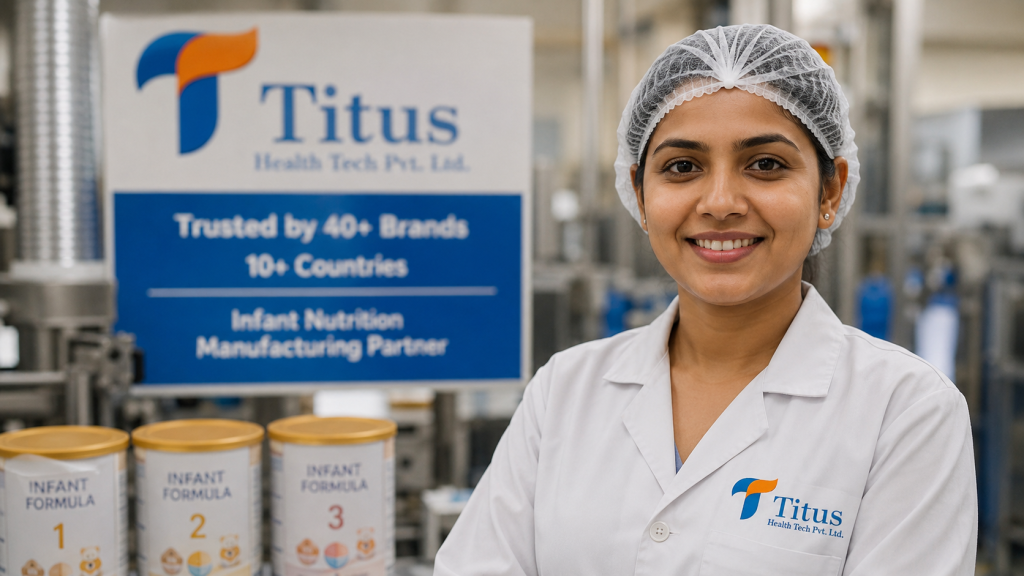
Among Indian Infant Milk Food Manufacturers, Titus Health Tech is built around science and safety. We run GMP-grade manufacturing infrastructure, hold FSSAI, ISO 22000, and HACCP certifications, and serve more than 40 private label brands plus 10 international partners. As an experienced infant formula manufacturer in india, we handle standard, premium, lactose-free, and specialty formulas under one roof.
Choosing among Infant Milk Food Manufacturers is really about trust earned through evidence. So check the paperwork, walk the floor, test the product, and call the references. Do that, and you will rarely go wrong. When you are ready to compare a transparent, audited partner against your own checklist, get in touch with the Titus team and we will share everything you ask for.
Start with the documents. Reliable Infant Milk Food Manufacturers will share valid FSSAI, ISO 22000, and HACCP certificates, plus recent lab reports. Then confirm everything with a site audit and a few client references.
FSSAI registration is the legal baseline. On top of that, ISO 22000 and HACCP show real food-safety discipline, while GMP confirms hygienic production. Export brands should also check country-specific approvals.
There is no single answer for every brand. The best infant food manufacturer in India for you is the one that matches your product, your volume, and your budget while meeting all safety standards. Shortlist a few, then compare them properly.
Yes. Many infant milk food manufacturers run private label and contract lines built for smaller volumes. Ask about minimum order quantities early, because they vary a lot from one plant to another.
With an existing formula, a few weeks to a couple of months is common. A custom recipe takes longer because of development and testing. A good infant formula manufacturer in india will give you a clear timeline upfront.
It is, when you sign a proper agreement. Insist on confidentiality clauses, clear ownership of your formula, and defined quality terms before any production begins.
Many do. Beyond filling the tin, experienced partners often guide you on label design, regulatory text, and the right pack sizes for your market. Ask whether design support is included or billed separately, so there are no surprises later. Clear answers here are a good sign of a mature, organised partner.
WhatsApp us