
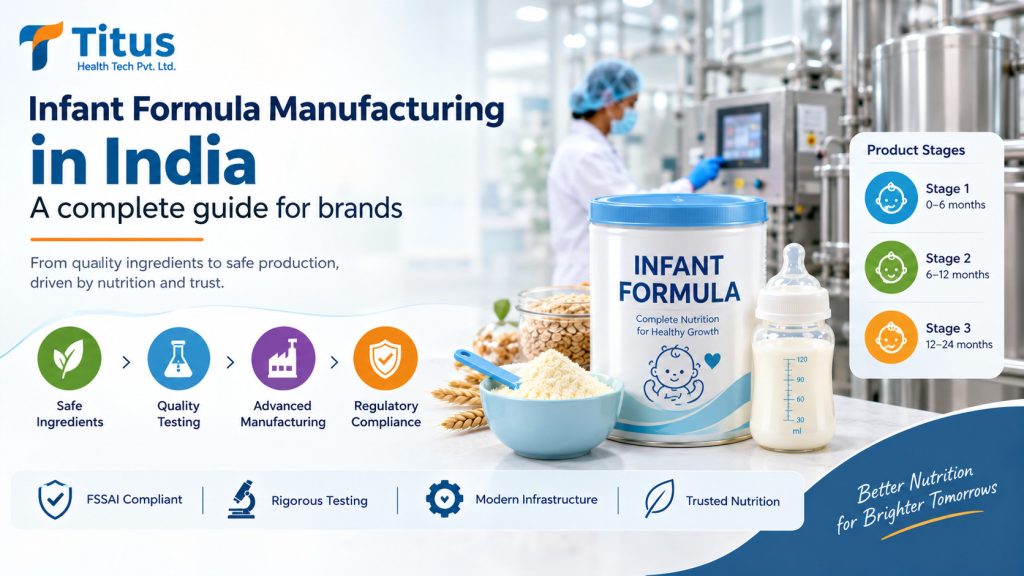
Choosing the right infant formula manufacturer in india is one of the most consequential decisions a nutrition brand, importer or distributor will make. Brands entering this space need a partner that understands both the science of infant nutrition and the operational discipline required to produce it consistently. For importers and distributors evaluating sourcing options, an established infant formula manufacturer can offer a mature ingredient supply chain, experienced technical teams and cost-competitive production without compromising on quality.
India has built one of the more mature food and nutrition manufacturing ecosystems in Asia, a major reason many brand owners now search for an infant formula manufacturer in india rather than setting up production themselves. Decades of dairy processing and milk powder experience translate directly into the technical foundation infant nutrition manufacturing requires.
Several structural advantages support this position:
An infant formula manufacturing company india based brands choose can support both domestic retail and export ambitions, since many facilities meet the documentation and traceability expectations of overseas markets. This is part of why a baby formula manufacturer india based operation is often more flexible than a standalone facility abroad.
Infant nutrition is segmented by age because an infant’s requirements for energy, protein, fat and micronutrients change across the first two years of life. Understanding this segmentation is essential before briefing any infant formula manufacturer in india, since composition, not just packaging, must be adjusted per stage.
Stage 1 formulas are designed for the earliest months of life and approximate the nutritional profile newborns require. Stage 2, often called follow up formula, reflects a shift in caloric density once complementary feeding begins. Stage 3 formulas are positioned for toddlers, where a larger share of daily nutrition comes from solid food.
Because the margin for formulation error is small, brands need an infant formula manufacturer in india with genuine technical depth. An infant milk formula manufacturer that can demonstrate a structured product development process and batch consistency gives a brand confidence that each stage’s composition will meet specification. This is also why many businesses look for a contract infant formula manufacturer with prior experience across all three stages rather than a generalist entering the category for the first time. Stage selection for an individual infant should be guided by a qualified healthcare professional, not by this general guide.
There is also commercial demand for specialty products, including formulas developed with the general nutritional considerations of low birth weight infants in mind, and lactose reduced formulations for infants with lactose related sensitivities. These are more technically demanding, requiring adjusted protein and carbohydrate sources and tighter process controls, which is why brands should vet an infant formula manufacturer in india carefully before entering this segment.
Specialty formula development carries a higher degree of regulatory and clinical sensitivity, so any brand should confirm that its infant formula supplier india partner has the formulation science and documentation to support these products responsibly. Selection of a specialty formula should always be guided by an appropriately qualified healthcare professional; this article does not offer clinical or treatment guidance.
Understanding how infant formula moves from raw ingredients to a finished product helps brand owners ask sharper questions during evaluation. The process spans three stages: blending and standardisation, spray drying and powder handling, and final filling and packaging.
Manufacturing begins with precise ingredient weighing against the approved formulation, since small deviations can affect nutritional accuracy for any infant formula manufacturer in india. Ingredients are then combined through controlled blending to achieve homogeneity, so every portion of the batch carries the same nutrient composition. Standardisation checks confirm protein, fat and total solids fall within specification before the batch proceeds. Batch traceability is maintained throughout, with each lot documented for later review. This documentation discipline separates a dependable infant formula production india operation from a less structured one.
Spray drying converts a liquid formulation base into the fine, free flowing powder consumers recognise. The liquid is atomised and exposed to controlled hot air, which rapidly removes moisture while preserving nutritional integrity, and moisture management is critical since excess moisture affects shelf life and powder flow. This is why spray drying discipline is a key marker of a capable infant formula manufacturer in india.
Once dried, the powder must be handled hygienically through enclosed systems to avoid contamination and maintain consistent particle size. Spray drying capability is capital intensive, which is why many brands check whether a prospective baby milk powder manufacturer operates this equipment in-house. Where Titus Health Tech’s capabilities are referenced later, only information verifiable against published materials is included.
The final stage involves filling powder into its retail format, most commonly tins or sachets, under controlled, hygienic conditions. Fill weight accuracy is checked continuously, and sealing integrity is verified to protect against moisture during storage and transport. Batch coding is applied so each pack can be traced to its production run, supporting quality and regulatory reporting. Packaging choice also affects storage and transportation planning, and buyers should expect this level of control from any infant formula manufacturer in india.
Infant formula sits within one of the most strictly regulated categories in Indian food manufacturing, since it is often the sole source of nutrition for infants who cannot yet eat other foods. A credible infant formula manufacturer in india needs demonstrable food safety systems, structured quality control, microbiological testing and documentation that can withstand regulatory scrutiny.
In India, infant formula falls under the Food Safety and Standards Authority of India, commonly known as FSSAI, which has established specific requirements for foods intended for infant nutrition. Brands working with an infant formula manufacturer should review the FSSAI Foods for Infant Nutrition Regulations to understand applicable composition, safety and regulatory requirements before launching a product.
Alongside FSSAI’s composition standards, infant formula sold in India is also governed by the Infant Milk Substitutes, Feeding Bottles and Infant Foods Act, which restricts advertising and promotion for this category. Labelling requirements typically cover composition, age suitability, preparation instructions and storage guidance, and promotional material must avoid claims that could discourage breastfeeding or mislead caregivers. This section is general orientation, not legal advice, and labelling should always be reviewed against the latest regulations before launch.
| Manufacturing Model | Best Suited For | Customisation | Brand Control | Typical Consideration |
| In-house Manufacturing | Established manufacturers | High | High | High capital investment |
| Contract Manufacturing | Growing brands | Medium to High | High | Partner capability |
| Private Label Manufacturing | Startups and established brands | Medium to High | High | Faster product development |
For brand owners, importers and distributors, selecting the right infant formula manufacturer in india is as much a due diligence exercise as a commercial negotiation. A well-run facility should speak clearly to its infrastructure, formulation support and regulatory track record, rather than vague or unverifiable claims.
Before shortlisting a partner, it is worth evaluating the following:
Supply-chain reliability is also worth probing, since consistent access to quality raw materials protects product consistency batch after batch. Brands working with private label infant formula manufacturers often say the relationship depends less on price and more on transparency and turnaround time. Avoid any infant formula manufacturer in india making unverified claims about being the largest or best, and ask instead for licensing documentation and references.
Titus Health Tech Pvt. Ltd. is a nutrition manufacturing company based in Gujarat, India, offering contract manufacturing, private label manufacturing and product development support to brand owners, importers and distributors building an infant nutrition range. As an infant formula manufacturer in india, its infant formula manufacturing capability spans multiple stage formulations sold under its Triomil range, alongside support for brands wanting a customised formulation.
For businesses exploring a private label route rather than launching under Titus Health Tech’s own brand, its private label infant formula manufacturing service supports product development, formulation guidance, packaging and documentation, positioning Titus as a practical infant formula manufacturing company india based brands can rely on without building a factory. Titus operates as an infant milk formula manufacturer across standard and lactose free formulas under its Triomil infant formula products line, reflecting its identity as one of several established private label infant formula manufacturers in India, and as a baby formula manufacturer india businesses can approach directly.
As a contract infant formula manufacturer, Titus Health Tech supports brands through formulation discussions, manufacturing planning and packaging in tin and sachet formats, maintaining the documentation practices expected of a compliant infant formula supplier india partner. The company also positions itself as a baby milk powder manufacturer with spray drying capability relevant to infant formula production india for domestic and export ranges. Specific certifications, capacities or facility details should be confirmed directly with Titus Health Tech, since this guide does not claim figures beyond what this infant formula manufacturer in india has published.
| Ready to Develop Your Infant Formula Brand? If you are looking for a reliable manufacturing partner for infant formula, private label nutrition or contract production, Titus Health Tech can help you evaluate your product requirements and manufacturing needs. Contact our team to discuss formulation, packaging, production and commercial requirements. Request a Quote from Titus Health Tech today. |
Choosing the right manufacturing partner is one of the most important decisions a brand makes when entering the infant nutrition category. Quality and regulatory compliance are the foundation on which consumer trust is built. Formulation accuracy, spray drying and packaging capability, and disciplined documentation determine whether a product performs consistently once it reaches the market. Brands, importers and distributors evaluating an infant formula manufacturer in india should conduct proper due diligence and avoid partners who cannot substantiate their claims. Companies such as Titus Health Tech, with its Triomil infant formula range and contract manufacturing services, illustrate the structured, compliance-focused approach brands should look for.
An infant formula manufacturer in india formulates, produces and packages infant milk formula on behalf of brand owners, handling ingredient sourcing, blending, spray drying, packaging and regulatory documentation.
Manufacturing typically involves ingredient standardisation, controlled blending, spray drying to convert the liquid base into powder, and final filling and packaging under hygienic, closely monitored conditions with batch traceability at every step.
Brands should evaluate manufacturing infrastructure, formulation and R&D support, a functioning quality control laboratory, FSSAI compliance history, packaging options and flexibility around minimum order quantities.
Contract manufacturing typically produces a formulation the brand supplies or approves, while private label manufacturing offers an existing or lightly customised formulation the brand can market under its own name, usually with a faster path to launch.
Infant formula must comply with FSSAI’s composition and labelling standards for foods for infant nutrition, along with the Infant Milk Substitutes Act, which restricts advertising and promotional activity for this category.
Yes, many manufacturers support customised formulation projects, including specific stage formulas or lactose free variants, though development should always involve appropriate testing, documentation and regulatory review.
Common packaging formats include tins for extended shelf stability and sachets for smaller or trial sized formats, with both requiring accurate fill weights, secure sealing and clear batch coding.
Brands can reach out through the Titus Health Tech contact page to discuss formulation, packaging, production capacity and commercial terms for contract or private label infant formula manufacturing.
WhatsApp us