
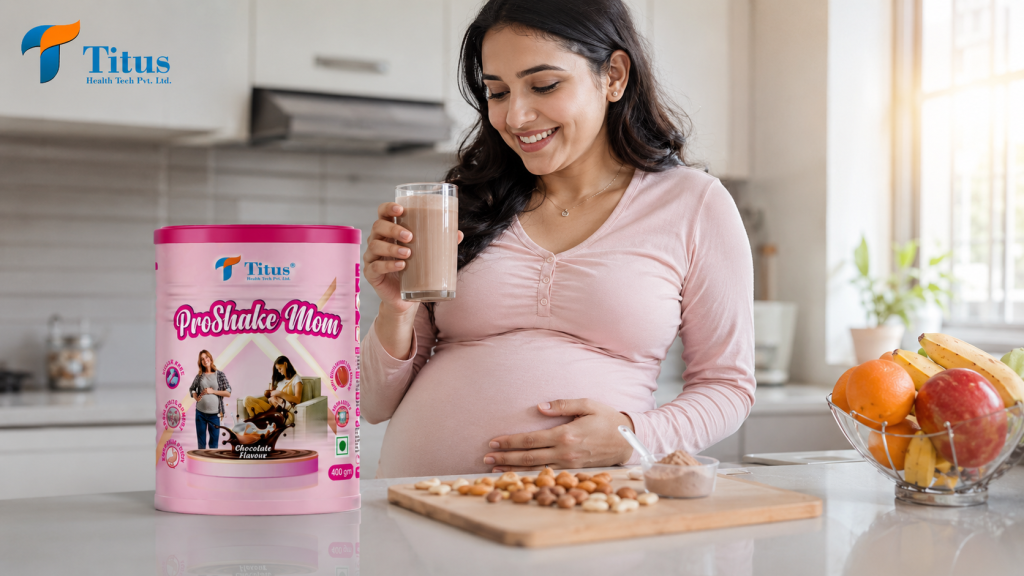
Pregnancy quietly rewrites how much protein your body needs – and most tubs on the shelf were never designed with that in mind. If you are standing in the supplement aisle reading labels and second-guessing yourself, the decision is simpler than it looks. The right protein powder for pregnant women is one with clean, complete ingredients, a transparent manufacturing process, and proof of safety testing for things like heavy metals. Everything else is just flavour and marketing. You can see how we approach maternal blends on our protein powder for pregnant women page.
Quick answer: A safe protein powder for pregnant women uses a complete protein source (whey, soy, or a well-balanced plant blend), avoids artificial sweeteners and unverified herbal add-ins, and carries FSSAI approval plus third-party heavy-metal testing. Always run your final choice past your obstetrician or a registered dietitian before you start.
I have spent years looking at supplement formulations from the inside – what goes into a blend, how it is sourced, and where corners get cut. So this guide is less about brand names and more about teaching you how to read a product the way a formulator does. By the end, you will be able to pick up any tub and judge it in under a minute.
Protein is the raw material your body uses to build your baby’s tissue, the placenta, and extra blood supply. Your own muscles and breast tissue draw on it too. Requirements climb through the second and third trimesters, which is exactly when many women in India struggle to eat enough – thanks to nausea, a smaller appetite, or a largely vegetarian diet that can run low on complete protein.
This is the gap a supplement is meant to fill. It is not a replacement for dal, paneer, eggs, soya, or curd. Think of it as backup for the days when food alone does not get you there. A good protein powder for pregnant women should feel boring and dependable, not exciting.
How much extra you actually need varies with your weight, trimester, and activity level. There is no universal number, which is why a quick check with your doctor beats guessing from a label. For a wider view of eating well across all three trimesters, see our complete prenatal nutrition guide.
When you flip a tub over, ignore the front-of-pack claims and read the ingredient panel from top to bottom. Ingredients are listed by weight, so the first three lines tell you almost everything.
You want a protein that supplies all nine essential amino acids. Your realistic options:
If the protein source is vague (“proprietary protein matrix”) or buried below sugar and fillers, put it back.
The shorter the ingredient list, the easier it is to trust. Be cautious with:
That last point matters. A pregnancy product and a gym product can look identical on the front. Read the back.
This is the part shoppers skip and formulators obsess over. Where the raw protein comes from, how it is processed, and whether the facility tests every batch decides whether the powder is genuinely safe. A serious infant nutrition products manufacturer treats maternal and infant blends with the same caution – controlled sourcing, batch traceability, and testing for contaminants before anything ships.
Plant proteins in particular can pick up heavy metals like lead, arsenic, or cadmium from the soil they grew in. A reputable maker tests for these and will tell you so. If a brand cannot explain how it makes its product, that silence is your answer.
In India, look for these signals:
A genuine infant nutrition products manufacturer will display certifications openly rather than hide behind a glossy label.
Use this as a mental checklist next time you shop.
Green flags
Red flags
Follow those five steps and you have done more due diligence than most buyers ever do.
Not everyone reading this is a shopper. If you are a brand, clinic, or wellness business, the same quality rules decide whether your product earns trust. This is where partnering with the right infant nutrition products manufacturer changes everything – because a strong formulation is worthless if the production behind it is shaky.
Many growing brands skip the cost and complexity of building a factory by using an infant milk formula private label model. In simple terms, an experienced manufacturer develops and produces the product to safety standards, and you sell it under your own brand. Done well, an infant milk formula private label lets you launch faster while keeping full control of your identity and pricing.
The catch: an infant milk formula private label is only as good as the partner behind it. You want sourcing transparency, batch testing, and regulatory support built in – not bolted on later. To see how that works in practice, explore our private label manufacturing services.
Ready to build a product parents can trust? Talk to the Titus Health Tech team about formulation and private label options designed around safety from day one.
No supplement is perfect, so here is the balanced view.
The honest takeaway: a quality protein powder for pregnant women is a helpful tool, not a shortcut around real food.
Choosing a protein powder for pregnant women is not about chasing the trendiest brand – it is about reading ingredients carefully, understanding how the product is made, and insisting on real safety testing. Lead with a complete protein, skip the questionable extras, and only trust makers who are open about their process. Then confirm everything with your doctor, because your situation is unique.
If you want products built on exactly these principles, take a look at what we make and how we make it at Titus Health Tech – and reach out if you would like guidance choosing or developing the right maternal nutrition product for you or your brand.
In most cases, yes – a protein powder for pregnant women is considered safe provided it uses a clean, complete protein, avoids unverified herbal or stimulant ingredients, and is third-party tested. Confirm with your doctor before starting.
Both work. Whey is complete and easy to digest if you tolerate dairy. For vegetarian mothers, soy isolate or a properly balanced pea-and-rice blend is a strong choice.
There is no single answer – it depends on your weight, trimester, and what your diet already provides. Your doctor or dietitian can set a safe amount, and powder should only fill the gap.
No. It is a supplement, not a meal. Whole foods give you fibre, micronutrients, and fullness that powder cannot match.
Steer clear of excess artificial sweeteners, weight-loss or fat-burner additives, stimulants, and herbal extracts not cleared for pregnancy.
Yes. A valid FSSAI licence number is the baseline. Pair it with third-party heavy-metal testing and GMP manufacturing for real confidence.
A specialist manufacturer formulates and produces the product to safety standards while you sell it under your own brand – useful for launching quickly without owning a facility.
Look for openly displayed certifications, batch traceability, third-party testing, and a willingness to explain their process. Transparency is the clearest sign.
WhatsApp us