
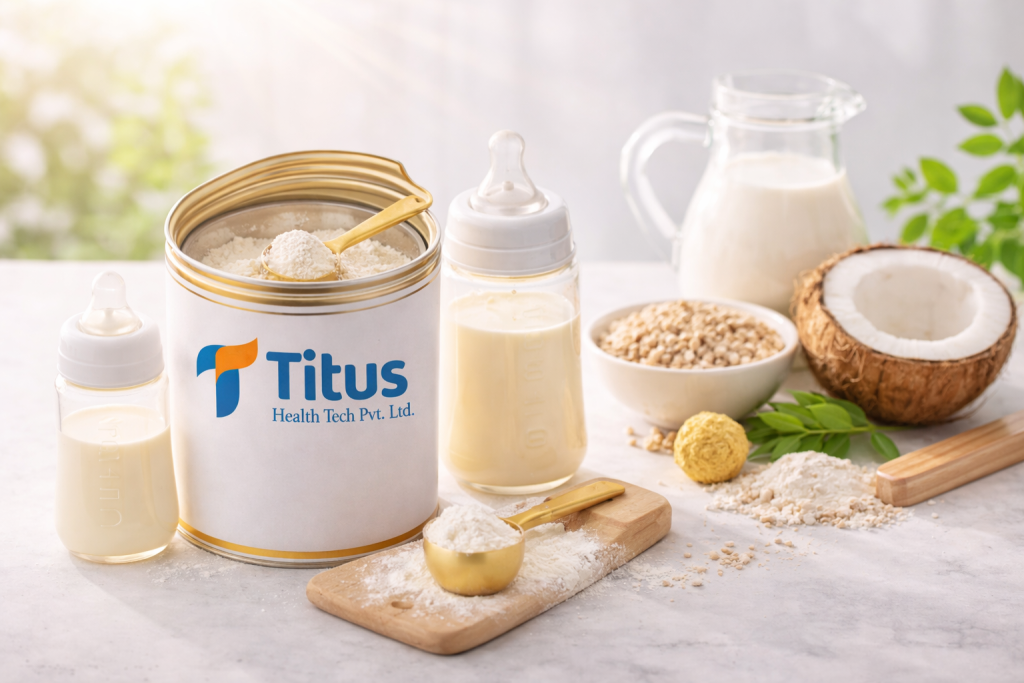
For nutrition companies that want to scale with confidence, infant milk food manufacturers are no longer seen as back-end vendors alone. They now influence formulation quality, regulatory readiness, product consistency, and the speed at which a new brand can move from concept to shelf. That shift matters because the infant category leaves little room for trial and error. Buyers expect safe ingredients, clean processes, and reliable supply. Brands, in turn, need partners who can support development, compliance, packaging, and growth together. This article explains why that partnership model is becoming essential, what to evaluate, and how the right manufacturing relationship can strengthen both market trust and long-term performance.
The old model treated manufacturing as a transaction. A brand submitted a brief, production happened, and the finished goods were delivered. That approach still works for simple products, but it is not enough for infant nutrition, where formulation stability, documentation, traceability, and batch-level consistency all matter.
A strategic partner contributes earlier in the process. It helps shape the product, flag technical risks, and shorten rework cycles. That is why infant milk food manufacturers are being evaluated not just on capacity, but on how well they support decision-making. When the right partner is involved early, brands reduce avoidable delays and make stronger launch decisions.
Problem: Many growing brands wait until the final stage to validate feasibility.
Solution: Involve the manufacturer during product planning so technical issues surface before time and budget are locked.
A strategic manufacturing partner supports more than production. It can advise on ingredient selection, packaging fit, shelf-life considerations, and documentation flow. It also helps align the product with the target consumer, whether the brand is building a premium line, a value-led offering, or a specialized nutrition format.
This is where infant milk food manufacturers create value beyond output. They reduce uncertainty. help brands avoid reformulation after stability testing. They improve planning around raw material availability, product standardization, and launch timelines. For a growing business, that support can be the difference between a smooth rollout and repeated course correction.
| Aspect | Traditional supplier | Strategic partner |
| Involvement | Late-stage execution | Early-stage collaboration |
| Focus | Output and dispatch | Quality, compliance, and growth |
| Problem solving | Reactive | Preventive |
| Business value | Transactional | Long-term brand support |
The difference is not just operational. It changes how the product is built and how confidently the brand can scale.
Growth in infant nutrition depends on more than promotion. It depends on whether the product can be repeated safely, packed correctly, and delivered consistently across markets. This is why strong infant milk food manufacturers often become part of a brand’s operational backbone.
They support growth in three practical ways. First, they help standardize the formulation so the product tastes, behaves, and performs the same in every batch. Second, they align manufacturing with documentation and quality checks so the brand can manage audits with less stress. Third, they make it easier to expand into new pack sizes, markets, or product lines without rebuilding the entire production model.
How long should technical review take?
Usually, a serious formulation discussion should start producing clear feedback within days, not weeks.
Does compliance slow down growth?
No. When handled early, it prevents rework and saves time later.
In infant nutrition, quality is not just about ingredients. It is about process discipline. A good manufacturing partner should have controlled sourcing, documented batch records, in-process checks, and final release standards that are easy to audit.
Brands often underestimate how visible these systems become after launch. Retail buyers, distributors, and healthcare-led channels look for consistency. Any mismatch in texture, seal quality, or labeling can weaken trust quickly. That is why infant milk food manufacturers with mature quality systems often become strategic partners rather than passive production houses.
Compliance is usually treated like a legal necessity. In reality, it is also a growth tool. Clear documentation helps a brand move faster when entering new channels, because the technical foundation is already in place.
For example, product specifications, testing records, and ingredient traceability can reduce back-and-forth during launch reviews. This matters especially for brands that want to position themselves as reliable and well-governed. Many teams now ask for the Best infant food manufacturer in India not only for production capacity, but also for documentation discipline and process credibility. That expectation is reshaping the market.
The best product teams do not start with manufacturing last. They start with feasibility. That means checking whether the concept can be produced at scale, whether the pack format fits the formula, and whether shelf-life targets are realistic.
This is where infant milk food manufacturers help turn ideas into launchable products. They can suggest practical adjustments before a trial run becomes an expensive correction. For smaller brands, that support saves time. For larger brands, it protects portfolio consistency across multiple SKUs of infant nutrition products.
These advantages matter because margin pressure is high and trust is fragile. A small quality issue in infant nutrition products can become a brand issue very quickly.
The phrase “manufacturer” can mean many things. Some partners simply produce what they are given. Others help shape the commercial and technical outcome of the product. Growing brands usually need the second type.
A useful way to judge the difference is to ask how the partner behaves when something is unclear. Does it only quote a price, or does it ask about ingredient stability, packaging compatibility, target shelf life, and market positioning? Does it offer a production line, or does it help the brand make a better product?
That is why infant milk food manufacturers should be assessed as business enablers, not just factories. Their real value appears when the project becomes more complex: tighter timelines, higher quality expectations, new formats, or multi-market expansion.
Problem: Many brands compare only cost per unit.
Solution: Compare manufacturing capability, compliance maturity, and product development support together, because those factors shape long-term performance.
The impact is clearest in launch planning, consistency, and market trust. A brand may spend heavily on packaging, advertising, and distribution, but if the core product does not perform consistently, growth stalls.
This is also why searches for the Best infant food manufacturer in India often reflect more than procurement intent. Brands are looking for a partner who can reduce risk, support scale, and protect the product experience from the first shipment onward. That expectation is even stronger when the product family includes infant nutrition products with different nutritional goals or pack formats.
A low-involvement supplier may be fine for simple replenishment. But for a brand building reputation, the strategic model is stronger because it improves control over formulation, testing, packaging, and replenishment. In practice, that means fewer surprises during launch and less pressure on the brand team after the first orders go out.
Consider a brand entering a new regional market with a milk-based nutrition line. The team wants a reliable launch, a premium shelf presence, and enough flexibility to add variants later. If the manufacturer only receives a final recipe, the brand may face delays, packaging revisions, or unforeseen stability issues.
Now consider the same project with collaborative support. The manufacturing team reviews the formula early, checks the pack format, confirms process fit, and flags risks before production begins. The launch becomes more controlled, and the brand can focus on distribution and positioning instead of troubleshooting. That is the practical advantage of working with experienced infant milk food manufacturers.
A strong partner should be evaluated on more than a sales pitch. The goal is to understand whether it can support both present needs and future scale.
If a partner can explain trade-offs clearly, it is usually easier to build with it long term. That matters because infant milk food manufacturers are not just delivering a commodity. They are helping shape a brand’s credibility.
These questions help separate a basic vendor from a real strategic fit. They also make it easier to compare options when the market includes many claims but fewer clear capabilities.
In infant nutrition, trust compounds. A single reliable launch can open doors. A single quality issue can close them. That is why the manufacturing relationship has become so important for brands that want to grow responsibly.
Strong infant milk food manufacturers help create repeatable quality, better compliance habits, and more stable planning. Over time, those factors improve brand confidence, retailer confidence, and consumer confidence. They also help the company move faster when it is ready to expand into adjacent categories or wider distribution.
For brands that are building a long-term business, the partner model is not a luxury. It is a practical way to reduce risk and improve execution. The capabilities described here are also aligned with the approach shown on TitusHealth Tech, where product support and manufacturing thinking are positioned as part of brand growth rather than a separate back-end task.
The infant nutrition market rewards brands that plan carefully and execute consistently. That is why infant milk food manufacturers are increasingly treated as strategic partners rather than simple production vendors. They influence product quality, documentation, scalability, and the confidence a brand brings to market. They also help teams avoid unnecessary delays by turning technical complexity into a manageable process.
For growing companies, this shift creates a stronger foundation for launch and expansion. Whether a brand is building infant nutrition products for a niche audience or aiming to scale across channels, the right manufacturing relationship can make the work more controlled and more credible. In a category where trust is earned slowly, that kind of support is not optional; it is part of the brand strategy itself.
They help new brands move from concept to production with less risk. A strong partner supports formulation, compliance, and consistency, which are all critical in infant nutrition.
Ask how early it gets involved, what technical support it offers, and how clearly it explains quality and documentation. Strategic partners think beyond dispatch.
Look for technical capability, transparent quality systems, scaling ability, and strong communication. Price matters, but process maturity matters more in this category.
Yes. The best partners review feasibility, packaging fit, and shelf-life considerations before production starts. That reduces rework and improves launch readiness.
Because small errors can affect safety, trust, and channel acceptance. Strong compliance also makes audits, expansions, and documentation much easier to manage.
Choose a partner with controlled sourcing, repeatable processes, and clear batch documentation. Consistency comes from systems, not just promises.
Yes. They can contribute to formulation decisions, launch planning, quality alignment, and expansion strategy. That is where their strategic value becomes most visible.
WhatsApp us