
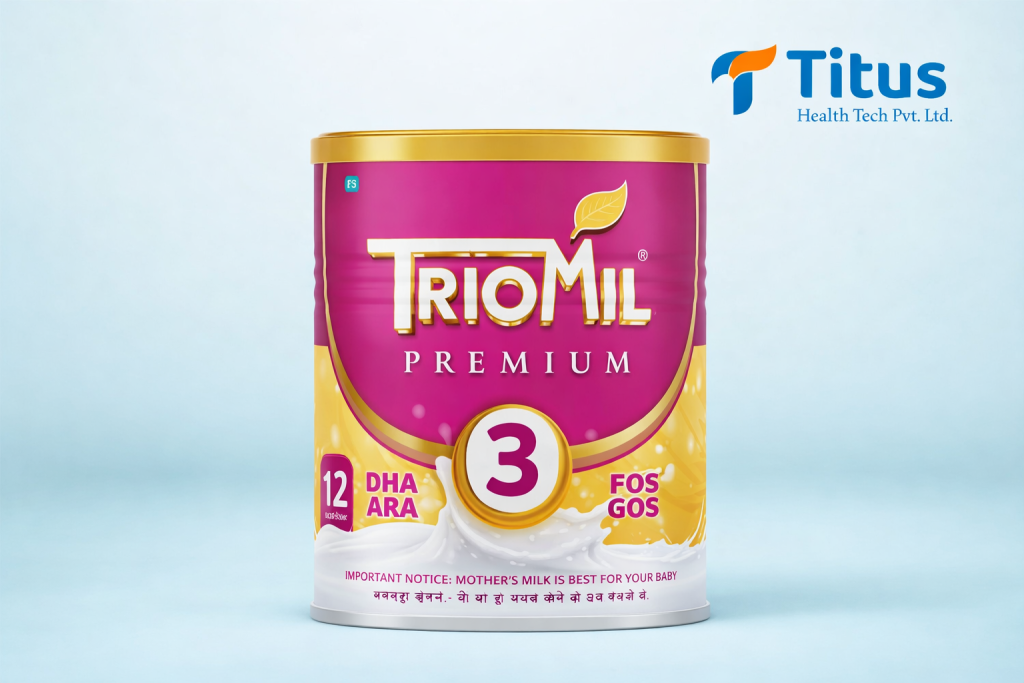
Choosing an infant formula manufacturer in india is no longer only about production capacity. It is about whether a partner can protect product integrity, meet strict compliance expectations, and support brand growth without compromising nutrition or safety. In a market where parents read labels carefully and businesses are judged on consistency, the manufacturer behind the product becomes part of the brand story.
That is why leading nutrition brands now look beyond basic factory credentials. They want a partner that can deliver controlled quality, traceable sourcing, scalable output, and stable product performance across batches. In this context, the best manufacturing partner is not simply the one with the largest facility; it is the one that combines science, process discipline, and commercial reliability in equal measure.
Quality is the foundation of trust in infant nutrition. Every ingredient, mixing step, heat treatment, and packaging decision affects the final outcome. A serious manufacturer works with defined specifications, documented checks, and controlled environments so that the product stays uniform from the first batch to the hundredth.
What does quality mean in practical terms? It means the formula should meet composition targets, stay stable in storage, and deliver the same experience every time it reaches the customer. Micro Answer: What makes quality so important in infant formula? Quality matters because even small variations can affect nutrition, safety, and consumer trust.
For businesses, quality also protects market reputation. A single inconsistency can create complaints, delays, and avoidable costs. That is why the best manufacturers invest in testing protocols, in-process monitoring, and release systems that reduce variation. In many cases, the difference between an average supplier and a strong infant formula manufacturer in india is not visible in marketing claims; it is visible in how tightly the process is controlled.
Safety is non-negotiable in infant nutrition. Brands do not have room for guesswork when the product is meant for a sensitive age group. A dependable partner follows hygiene discipline, raw material verification, allergen control, and batch-level traceability to reduce risk at every stage.
Problem: why do some infant nutrition products lose buyer confidence quickly?
Solution: because the manufacturing system fails to show clear control over contamination, storage, or consistency. When a facility documents every major step and maintains transparent records, buyers gain confidence much faster.
A strong manufacturer should also be able to explain its controls in plain language. That includes incoming ingredient checks, sanitation routines, temperature monitoring, and packaging safeguards. If a partner cannot explain these areas clearly, the commercial risk rises. This is one reason brands often prefer experienced teams over low-cost alternatives. In a competitive market, the right infant formula manufacturer in india must be able to prove safety, not just claim it.
Documentation also matters because it protects the brand when questions arise later. Clear batch records, retained samples, and internal review notes help show that the product was made under controlled conditions. For any business working with the right supplier, that paper trail is not a formality; it is part of the trust equation. It also makes audits easier and helps teams respond faster to distributor or regulatory requests.
Scale is often misunderstood as simple volume. In reality, scale means the ability to grow without losing consistency. A reliable partner should be able to handle small launches, mid-size growth, and larger commercial runs without forcing the brand to rebuild its supply chain every few months.
This matters because infant nutrition brands rarely grow in a straight line. Some launch with limited volume, then expand after distributor acceptance or export interest. Others need seasonal flexibility or new pack sizes. A manufacturer with weak scalability can slow everything down. By contrast, a strong partner makes production planning smoother, reduces lead-time pressure, and keeps replenishment stable.
What does scale actually help with? It helps lower disruption, improve planning, and support a more predictable supply chain. That is why scale is not just an operations issue; it is a business strategy issue. The best infant formula manufacturer in india treats scale as a system, not a slogan.
The market today expects more than a standard manufacturing service. It expects compliance, product intelligence, packaging flexibility, and documentation that supports both domestic and export requirements. A modern infant formula manufacturer in india must therefore combine technical execution with commercial adaptability.
This shift is also visible in adjacent categories. An infant cereal manufacturer in india may face different formulation needs, but the same expectations around quality, safety, and consistency still apply. Many brands that begin with cereal products later move into formula or blended nutrition formats, and they usually prefer partners who understand both categories. In such cases, the presence of Satvik cereal options can support brand positioning for consumers who prefer simpler, plant-based, or clean-label messaging.
The bigger point is that today’s buyers are not only purchasing a product. They are purchasing a manufacturing capability that can support their brand promise. That is why facilities with advanced systems, responsive teams, and reliable documentation stand out so quickly.
A good partner can make product. A great partner can help a business grow. That difference becomes clear when you compare planning discipline, technical support, and commercial stability. A great partner does not just fill orders; it helps shape the product roadmap, packaging approach, and long-term production plan.
| Area | Average supplier | Strong manufacturing partner |
| Quality control | Basic checks | Structured, multi-stage monitoring |
| Safety | Minimum compliance | Traceable, documented control |
| Growth support | Limited flexibility | Scalable capacity and planning support |
| Product development | Reactive | Proactive and collaborative |
| Brand support | Transactional | Strategic and long-term |
This comparison becomes even more important when a brand is preparing for distributor onboarding or new territory expansion. An average supplier may look fine on paper, but a stronger partner brings predictability across procurement, production, and delivery. For a company choosing an infant formula manufacturer in india, that predictability can reduce stock-outs, limit emergency rework, and improve planning confidence across the full sales cycle.
Micro Answer: What is the main difference between an average supplier and a strong partner? The difference is that a strong partner helps reduce risk while supporting growth, not just production.
Not every brand needs the same type of manufacturing partner. A startup may need flexibility, smaller initial batches, and support with product positioning. An established business may need higher output, stronger forecasting, and packaging consistency across multiple markets. A premium infant formula manufacturer in india should be able to serve both types of needs without creating unnecessary complexity.
For brands building a clean-label portfolio, an infant cereal manufacturer in india can be the right starting point because it allows focused product entry with simpler shelf messaging. For brands looking at broader baby nutrition, formula manufacturing is often the next logical step. In both cases, the choice should depend on commercial stage, target market, and product ambition.
This use-case lens helps businesses avoid overspending on capacity they do not need yet, or underinvesting in support they will soon require. A well-matched infant formula manufacturer in india can make the difference between slow execution and steady growth.
The evaluation process should be structured. Instead of focusing only on pricing, brands should compare technical depth, response time, and transparency. A practical way to evaluate a partner is to ask for product specifications, production timelines, testing methods, and communication standards.
Start with the basics: does the partner understand your target segment, your packaging needs, and your growth expectations? Then move into operational detail. Ask how raw materials are approved, how production is monitored, and how deviations are handled. These questions often reveal more than a polished sales pitch.
How should a brand evaluate a manufacturing partner?
By checking quality systems, safety controls, production scale, and how clearly the team communicates.
Packaging and labeling deserve equal attention because they shape both compliance and shelf impact. A product may be technically sound, yet still underperform if the pack is hard to read, poorly sealed, or misaligned with the target channel. Teams evaluating an infant formula manufacturer in india should therefore ask how the partner handles format changes, labeling updates, and pack-size planning. These details often decide whether a launch feels polished or improvised.
A serious partner also supports the commercial side of the launch. That includes sample coordination, technical feedback, and a clear timeline for revisions when the market needs a change in flavor, pack size, or label detail. For brands planning wider distribution, this matters because retail and export channels often move at different speeds. A dependable manufacturer keeps those moving parts organized so that the business can stay focused on demand creation instead of constant production firefighting. In practice, this kind of support is one of the clearest signs of a mature manufacturing setup.
Brands that follow this process usually make better long-term decisions. They avoid suppliers that look attractive on cost but weak on execution. Over time, this evaluation discipline saves money, reduces product risk, and improves market credibility. That is why serious buyers often shortlist only a few strong infant formula manufacturer in india options before moving forward.
Trust in infant nutrition is built through repeated performance. One good batch is not enough. Consistency across months and production cycles is what creates confidence. A reliable infant formula manufacturer in india understands this and works to reduce variance, improve documentation, and stay responsive when requirements change.
This is also where business relationships matter. The strongest partnerships are usually the ones where both sides communicate clearly, plan ahead, and solve problems early. If a manufacturer can support formulation reviews, packaging updates, and production planning without creating delays, it becomes far more valuable than a vendor that only reacts to orders.
In practical terms, the strongest partnerships are the ones that stay useful after the first order. Product improvements, packaging refinements, and forecast updates become easier when the manufacturing team understands the brand’s category, target audience, and growth plan. That is why the right infant formula manufacturer in india becomes a long-term operating advantage, not just a vendor.
The best infant nutrition brands are built on more than product demand. They are built on quality systems, safe production, and the ability to scale without losing control. A strong infant formula manufacturer in india brings all three together: disciplined operations, practical support, and a structure that helps brands grow with confidence. The same logic also applies when businesses explore related categories such as infant cereal manufacturer in india or cleaner positioning formats like Satvik cereal, where consistency and credibility still decide long-term success.
For brands looking to build a dependable manufacturing partnership, this is where Titus Healthtech can stand out as a serious option. To understand more about the company’s manufacturing approach and product direction, the brand can explore TitusHealth Tech and evaluate how its capabilities align with modern infant nutrition requirements. In a market where trust is earned through execution, the right partner is the one that supports quality today and scale tomorrow.
1. What should a brand look for in an infant formula manufacturer in india?
A brand should check quality controls, safety documentation, scalability, and communication clarity. These factors matter more than price alone.
2. Why is quality so important in infant formula production?
Quality protects nutritional accuracy, product consistency, and consumer trust. In infant nutrition, even small deviations can create serious concerns.
3. How does scale help a growing brand?
Scale allows the brand to increase output without changing partners or losing consistency. It also helps with planning, inventory, and lead times.
4. Is an infant cereal manufacturer in india useful for new brands?
Yes, especially for brands that want a lower-complexity entry into baby nutrition. It can be a practical first step before broader formula expansion.
5. What role does Satvik cereal play in brand positioning?
Satvik cereal can support clean-label or simplified nutrition positioning. It may appeal to customers looking for thoughtful ingredient choices and a more natural brand image.
6. How can a company compare two manufacturers fairly?
Compare testing systems, batch consistency, documentation quality, and response time. A low-cost option is not always the better long-term choice.
7. Why do businesses prefer experienced manufacturing partners?
Experienced partners reduce risk and help brands manage quality, compliance, and scale more smoothly. That makes growth easier and more predictable.
WhatsApp us